Want to know the top regret homeowners have when they sell without an agent? They almost always say it’s pricing the house wrong for today’s market.
NAR’s latest data shows sellers say the toughest part of the process was setting the right price for their home.
Top 5 Biggest Challenges for Sellers Going FSBO:
Pricing: Setting the right price from the start
Prep: Getting the home ready or making needed repairs
Timing: Selling within your ideal timeframe
Paperwork: Managing all the legal documents
Time: Juggling every part of the selling process
That makes sense — pricing isn’t just an online estimate or copying a neighbor; it requires real insight into:
Buyer Demand: What buyers are willing to pay right now
Competition: How many other homes you’re up against locally
Comparables: What similar nearby homes are actually selling for
Location: How desirable your neighborhood is
Condition: The overall state of your home
Without context, you can easily miss the mark — and in today’s picky market, that mistake can cost you.
Overpricing Isn’t a Small Mistake, It Snowballs
Your price helps form a buyer’s first impression — list it too high and it can trigger a chain reaction of issues.
If your price is too high, buyers will pass on your home — which means fewer showings, fewer offers, and probably a price drop to bring them back.
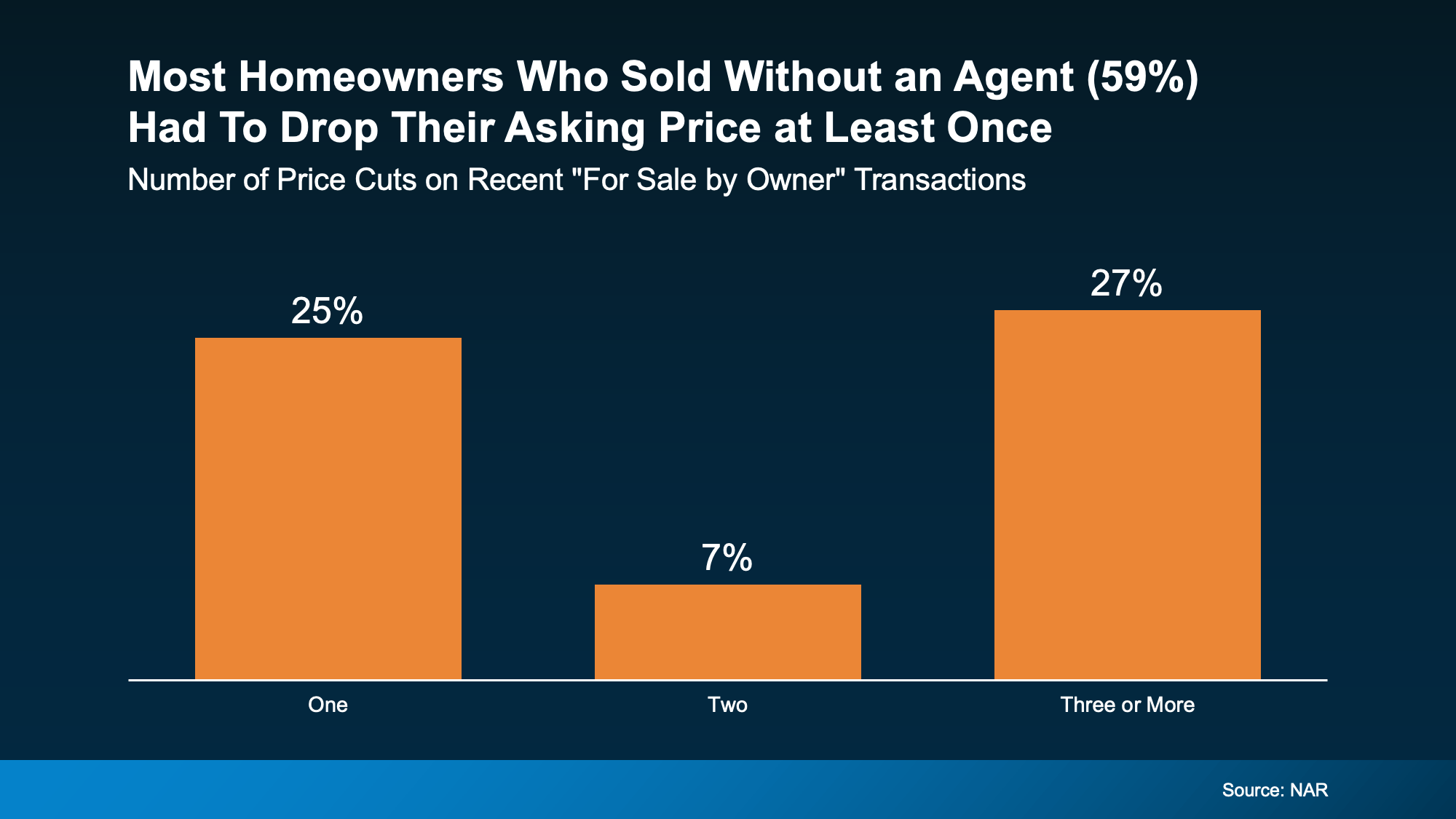
That’s been happening a lot lately — especially with homes sold without an agent. The same NAR report found that most FSBO homes (59%) had to lower their asking price at least once (see the orange in the chart).
The NAR report found that 59% of homes sold without an agent had their asking price reduced at least once.
The Part Sellers Don’t See Coming
The problem is, lowering the price doesn't always solve it. It often pulls in bargain hunters instead of serious, confident buyers. Many people interpret a price cut as a red flag that something's wrong with the home, and that impression can push buyers away.
If you wait until your home finally sells after overpricing it, you might end up with less money than if you’d set the right price from the beginning — and the data supports that.
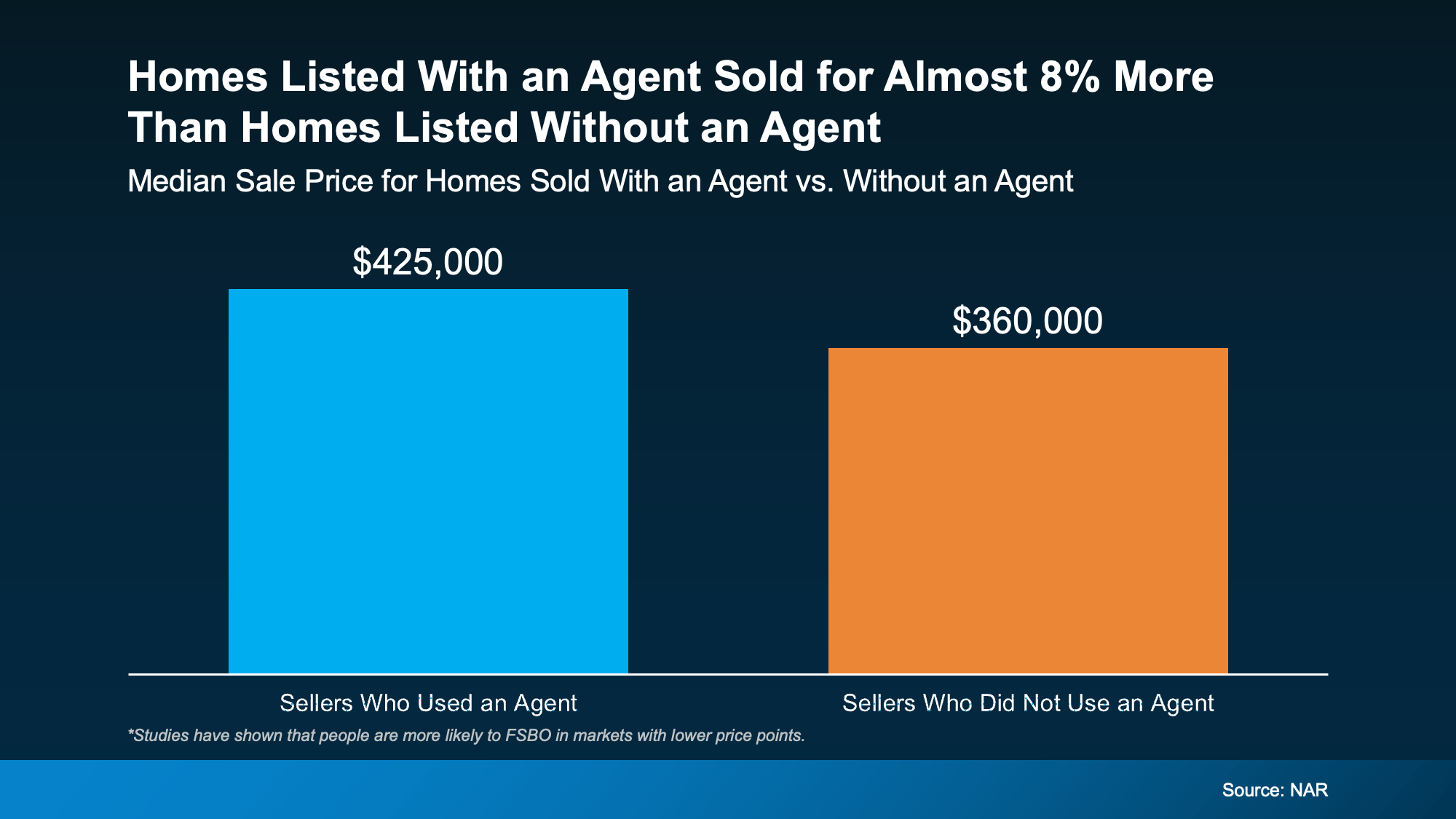
According to the NAR, homes sold with an agent typically fetch about 8% more than those sold without one.
It’s not magic — agents bring the expertise to get it right: the price, the prep, the presentation, and the paperwork.
Get all of that right from the start, and you'll be positioned to maximize how much you make from your sale.
You might think selling without an agent saves money, but that’s not always the case. In many situations, selling on your own ends up netting you less, and that can really change how you look at the whole idea.
Bottom Line
These days the real danger of selling without an agent isn’t the paperwork or the legwork — it’s getting the price wrong. And once your price is off, it’s tough to fix.
If you’re considering selling and want a realistic idea of what your home would fetch in today’s market, let’s talk. A quick pricing chat now can help you avoid bigger regrets down the road.