There’s a lot of uncertainty out there right now, and the headlines can feel pretty dramatic. If you’re thinking about buying a home, all of that noise can definitely make you second-guess your decision.
A recent study by CNBC asked homebuyers what’s worrying them most right now, and the same three concerns kept coming up:
Mortgage rates
The number of homes for sale
Home prices
But a lot of what you’re probably hearing about those topics is based more on misconceptions than actual facts. So let’s break it down together and separate what’s real from what’s not.
Misconception #1: “I’ll Just Wait, Because Mortgage Rates Are Going To Fall Dramatically”
One idea that’s been making the rounds on social media is that mortgage rates are going to drop dramatically any day now, so it’s better to just wait to buy.
But is that actually what’s expected?
Mortgage rates have come down a bit over the past few weeks, but forecasts don’t point to a big drop coming. Most experts expect they’ll likely stay in the low 6% range this year.
And that’s not much different from current rates (see graph below).
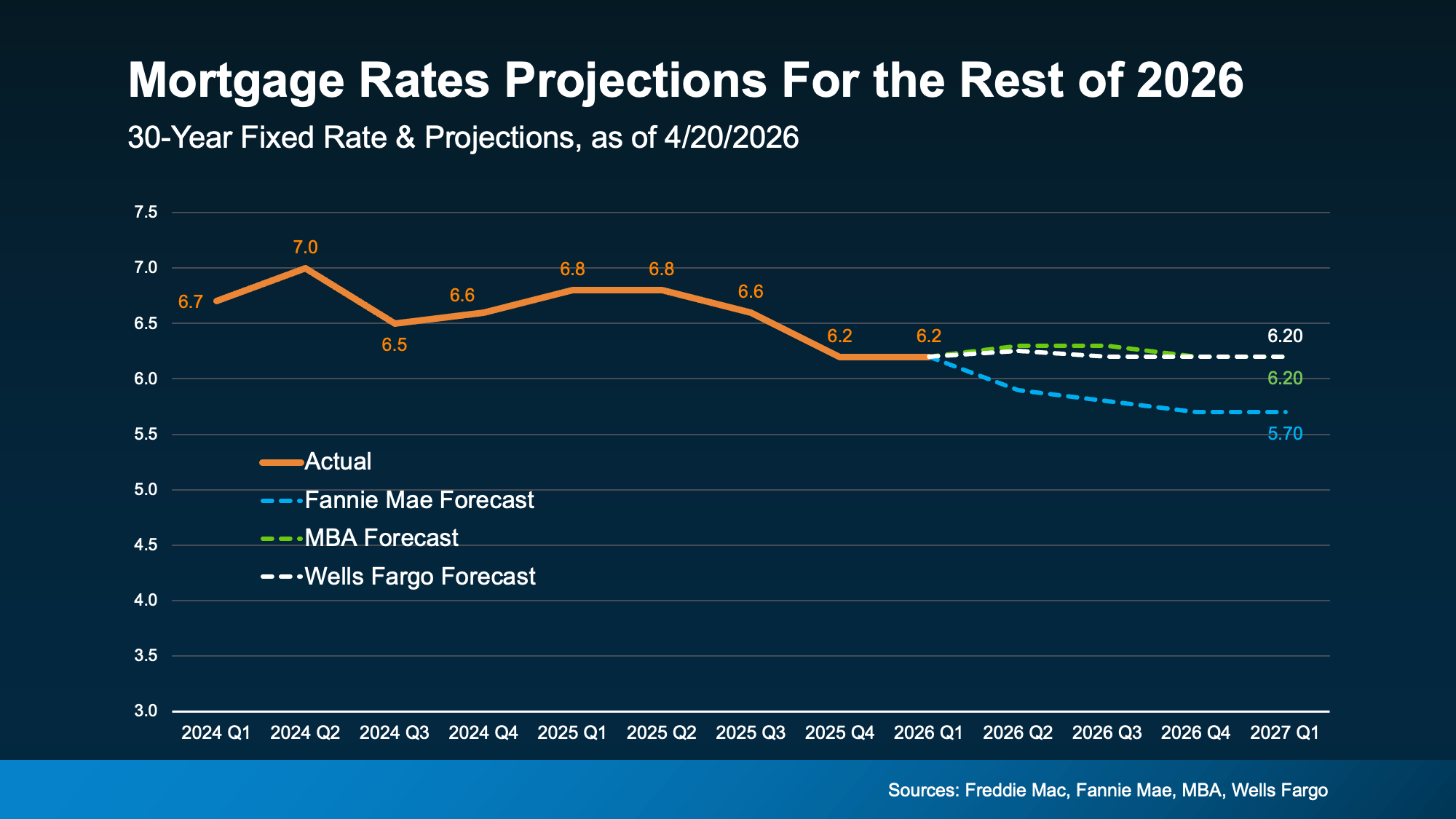
Of course, that all depends on where inflation and the economy head next. But based on what we know right now, waiting around for a big drop in rates may not play out the way some people are hoping. As U.S. News explains:
“ “Mortgage rates aren’t expected to change much over the next several quarters . . .”
”
Not to mention, with current rates, buying is already more affordable than it was a year ago, so even if rates stay about the same, things are still better than before.
Misconception #2: "There Are Too Many Homes for Sale Right Now”
You’ve probably heard that inventory is up, and that’s true nationally. There are about 8% more homes for sale compared to this time last year. But that’s not necessarily a bad thing. In fact, it’s one of the reasons buyers have a bit more breathing room right now.
The issue is that headlines are taking something positive and making it sound negative. They focus on things like this being the most inventory we’ve had since 2019 or how many homes builders are putting up, which can make it feel like the number of homes for sale is rising too quickly.
But that’s not what the bigger picture shows.
Data from Realtor.com shows that even though inventory is higher than last year, it’s still about 14% below what we saw during the last normal housing market between 2017 and 2019.
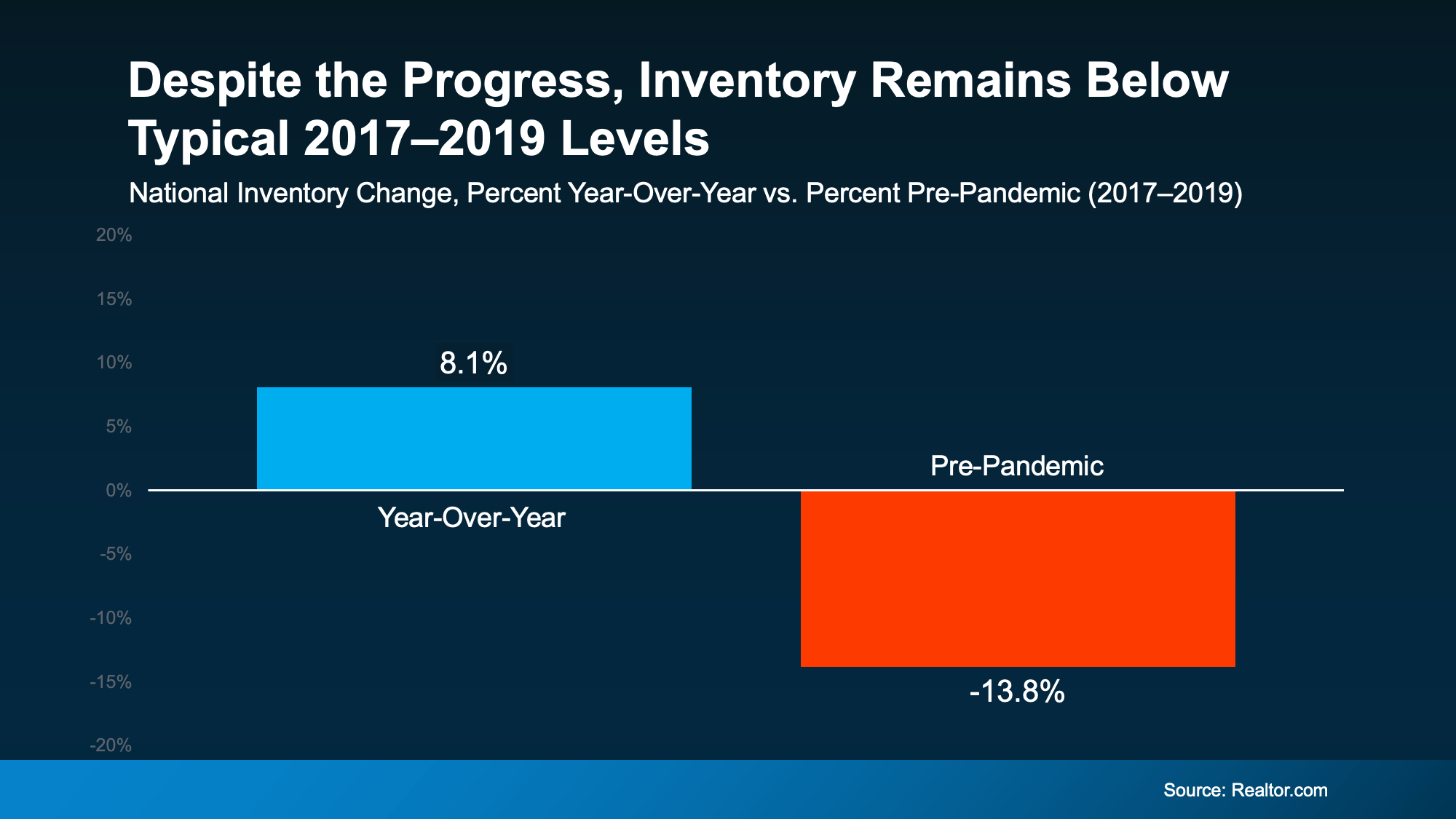
While it really depends on the area, only 9 states actually have more inventory than they did before the pandemic. That’s one of the big reasons there still aren’t enough homes for sale to create anything like the 2008 crash.
Misconception #3: “Home Prices Are About To Crash”
You’ve probably seen this one too. The confusion comes from the fact that some metros are seeing small price drops, and influencers are taking that and saying prices are crashing. But that’s not what’s actually happening.
Most areas are actually seeing prices go up, not down. And here’s why:
Many homeowners are staying put because they don’t want to give up the low mortgage rate they locked in a few years ago, which is keeping inventory from growing too much
Since inventory is still below pre-pandemic levels, there simply aren’t enough homes for sale to drive prices down sharply
And even in places with more homes listed, some sellers are choosing to take their homes off the market instead of lowering their prices
And here are three major reasons prices aren’t headed for a crash.
And even in markets where prices are seeing small declines, the drops aren’t big enough to wipe out the strong gains most homeowners have built over the past five years (see graph below).
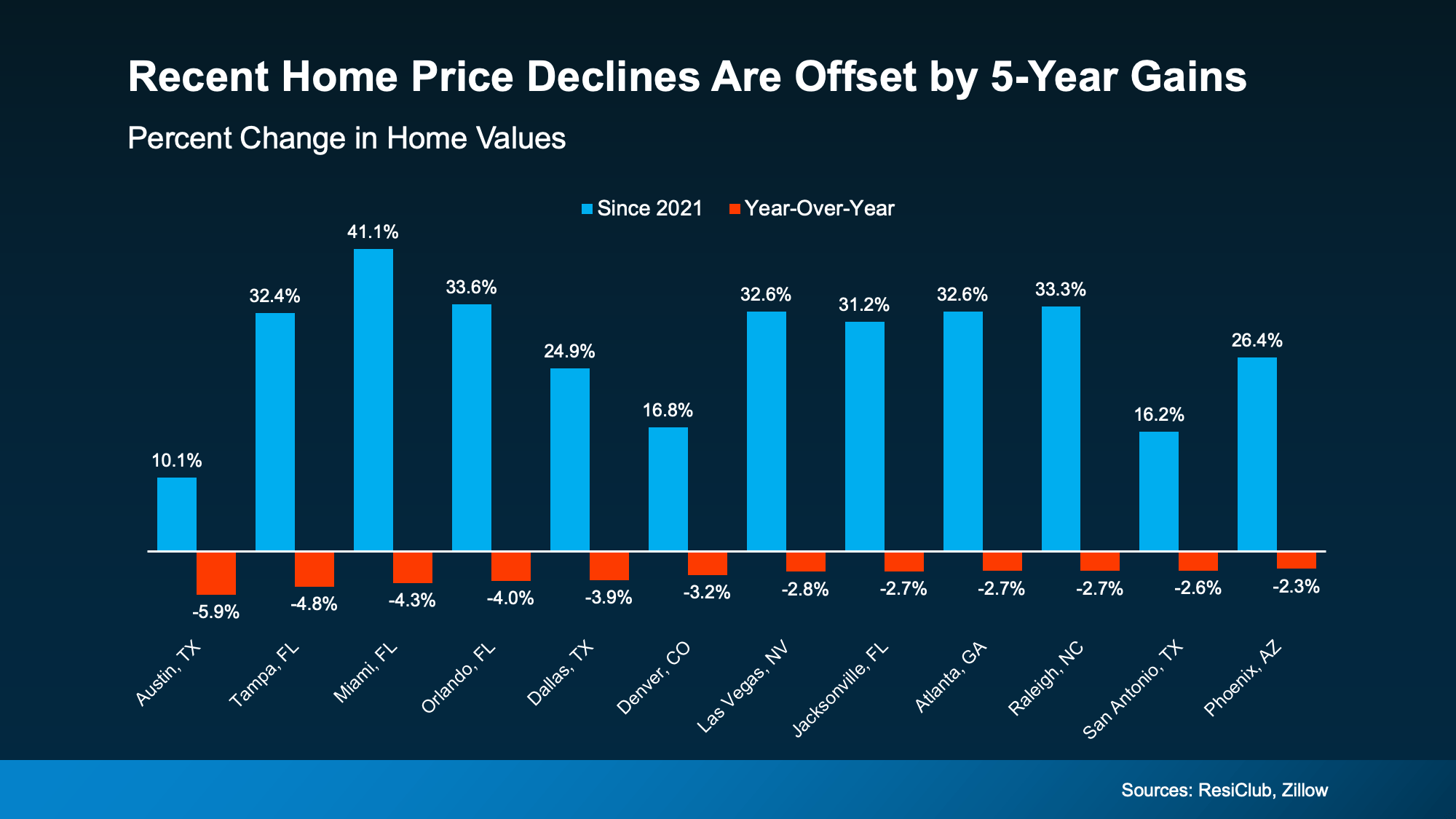
That’s not a crash at all. It’s just prices settling down after a few years of record highs.
Bottom Line
Online posts can definitely make things sound a lot worse than they really are. If you want a clear, data-backed view of what’s actually happening in today’s market, it’s best to talk with a real estate agent.
Let’s connect so you’ve got someone who can help you sort out what’s fact and what’s just noise in today’s market.