Buying a home is one of the biggest purchases you’ll ever make, and homeowner’s insurance protects that investment. Think of it as your safety net. NerdWallet explains it:
• Covers repairs and rebuilding costs. If your home is damaged by a fire, storm, or another covered event, your policy helps pay to fix it and, in some cases, even rebuild it completely if needed.
• Protects your belongings. It can also help replace personal items like furniture, electronics, jewelry, and clothing if they’re stolen or damaged.
• Provides liability coverage. If someone gets hurt on your property, your insurance can step in to help cover medical bills or even legal expenses.
That peace of mind does come at a price, and lately that price has been going up.
Why Home Insurance Premiums Are Going Up
There are several reasons insurance premiums are rising today. In simple terms, here’s what the Insurance Research Council says is driving prices up.
Severe weather and natural disasters are happening more often, which means more insurance claims. At the same time, the cost of building materials and labor has gone up, so insurers are facing higher expenses when repairing or rebuilding damaged homes.
That combination leads to higher premiums. The graph below shows how they’ve risen recently, with each bar representing the percentage increase in insurance costs for that year.
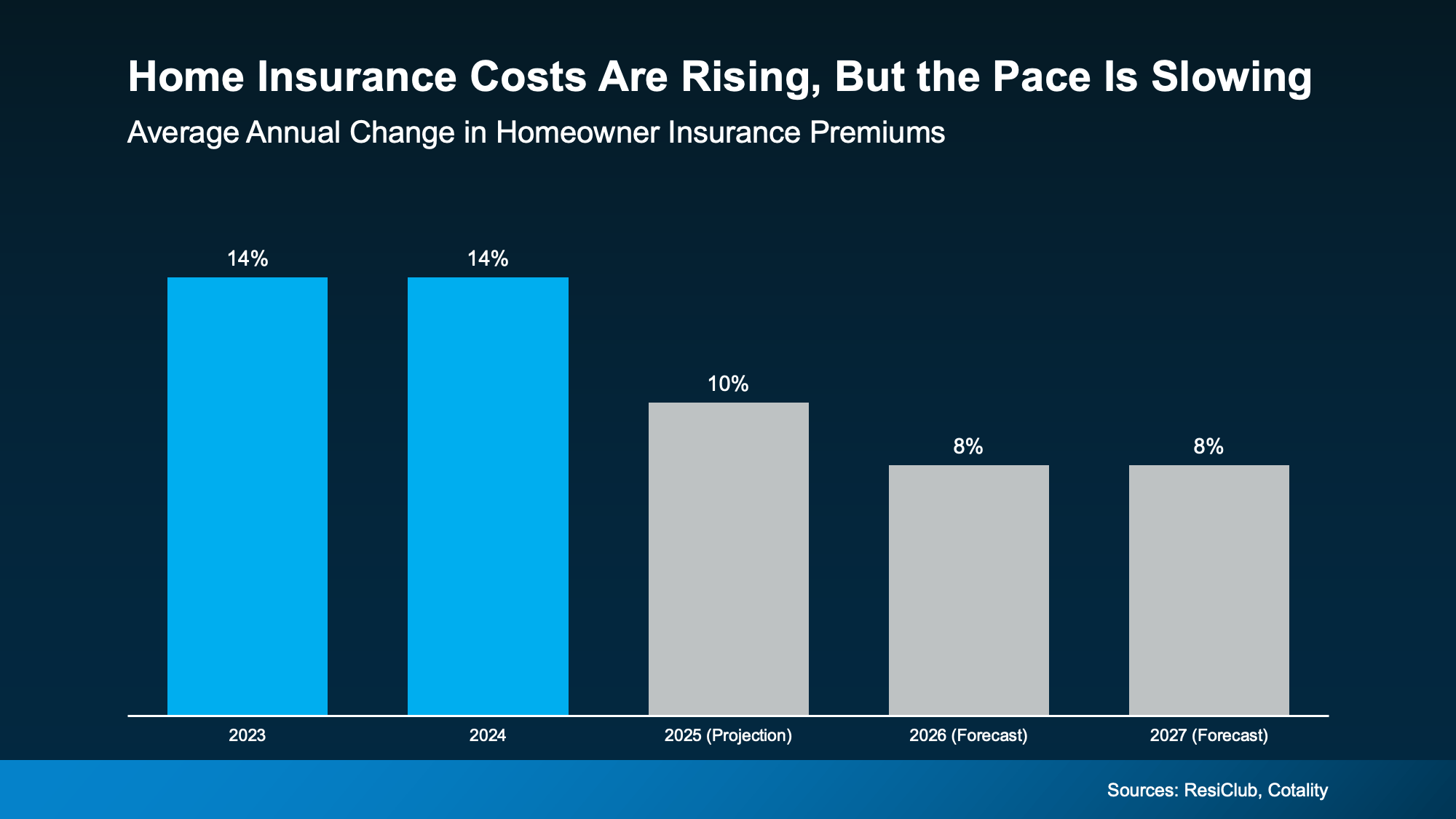
The good news is the rate of those increases may finally be starting to slow down. According to ResiClub and Cotality, insurance costs are still rising, just not as fast as they were before. By their estimates:
• In 2023 and 2024, insurance costs jumped about 14 percent each year.
• In 2025, the increase cooled to around 10 percent.
• And in 2026 and 2027, it’s expected to rise closer to 8 percent per year.
It’s not perfect, but it’s a step in the right direction for homeowners.
That’s still an increase, but the pace is slowing down — and there’s another silver lining.
While insurance costs are on the rise, mortgage rates are coming down, which can help offset some of that added expense. As Michael Gaines, Senior VP of Capital Markets at Cardinal Financial, explains:
““Rising taxes and insurance do create pressure, but they don’t erase the benefits of a lower rate . . . A small rate improvement, paired with the right loan program and smart planning, can still make homeownership possible . . . It’s less about one factor canceling another out, and more about helping buyers layer the right solutions together.”
”
Costs Are Going To Be Different Depending on Where You Buy
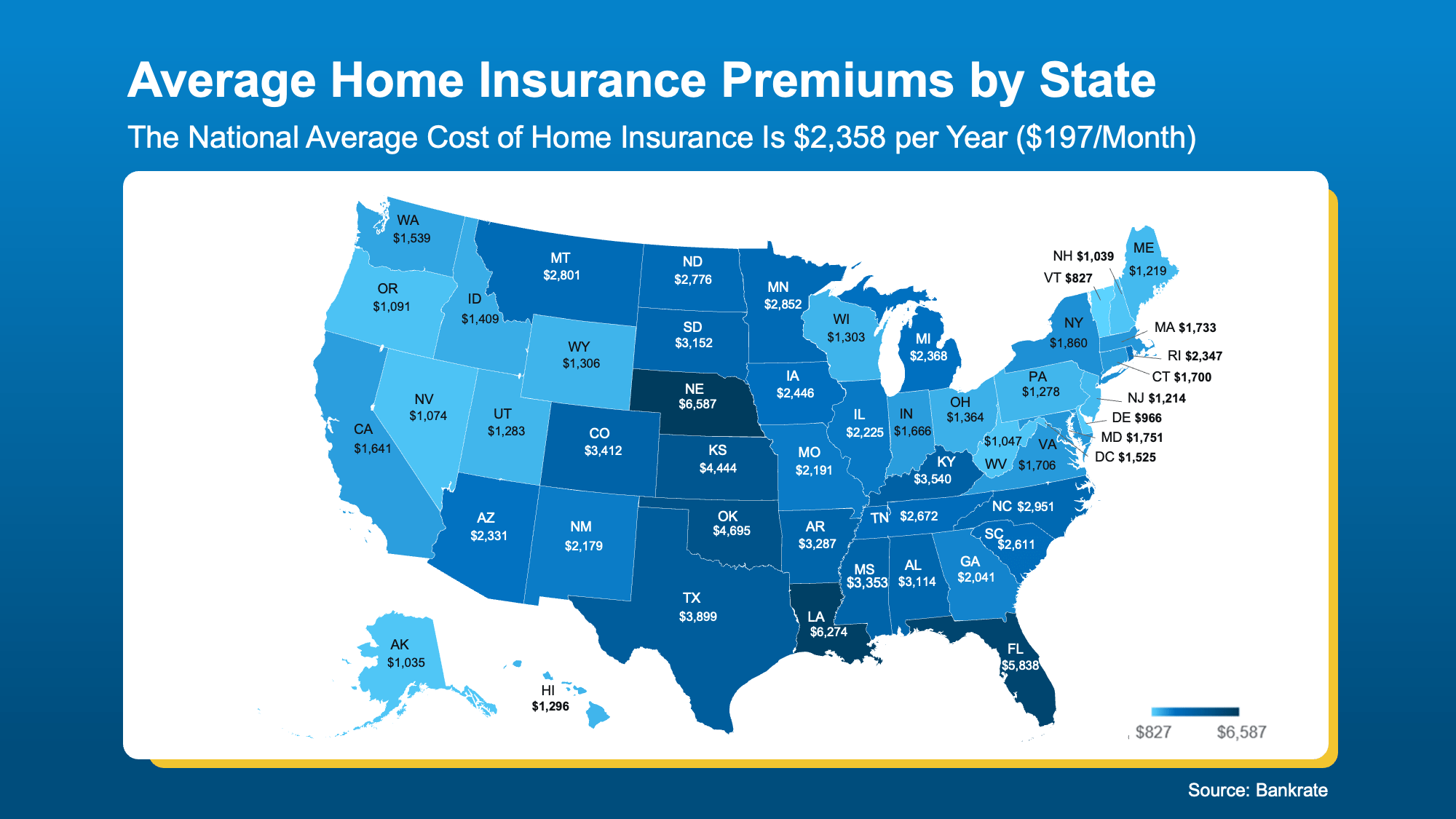
So how much should you budget for this? It depends on the home's price and location, the coverage you want, and other factors. Like most real estate expenses, costs vary by area.
You can get a quick sense of your state’s typical premiums from the map below.
So, What Can You Do About It?
Usually your first insurance payment is included in your closing costs. After that, it becomes a regular expense, so it’s important to know premiums are rising. That way you can factor them into your budget and have a clear idea of what you can comfortably afford.
If you’re running the numbers and looking for ways to save, there are a few smart moves that can help you land a better insurance rate. Insurify and NerdWallet recommend starting with these tips:
• Shop around and compare quotes from a few different insurance companies.
• Bundle your policies by combining home and auto coverage to unlock discounts.
• Ask about available discounts so you don’t miss out on savings you may qualify for.
• Point out any home upgrades, like a new roof or storm-resistant windows, since those can help lower costs.
• Work on improving your credit, because a stronger score can lead to better premiums.
Bottom Line
If you’re planning to buy a home, remember to budget for homeowner’s insurance.
As costs rise, understanding what to expect