For many first time buyers, owning a home can feel like it’s always a few years away. Saving for a down payment takes time, and the longer you rent, the harder it can feel to make that dream a reality.
But buying your first home doesn’t have to feel like a distant goal. Two choices within your control could help you get there sooner, even with affordability being a challenge right now.
How Long Buying Really Takes
First, let’s clarify what “breaking even” means. It’s the point when the cost of owning a home is about the same as renting over the same period. After that, owning can actually cost less than renting. As Kara Ng, Senior Economist at Zillow, explains:
““Buyers should think about not just when they can afford to buy, but how long they’d need to stay before owning makes more financial sense than renting.”
”
So, how long does it usually take to reach that point? And are there ways to get there faster? Let’s break down the numbers.
According to Zillow, it can take about 8.5 years to save for a 20% down payment, followed by another 6.2 years before owning costs about the same as renting. That adds up to nearly 15 years. But there’s an important catch. This estimate assumes you’re buying a mid priced home and putting 20% down.
Change either one and you can shorten the timeline. Change both and you could reach that point much faster. It also depends on where you live, since home prices and rents vary from one market to another.
A Starter Home Can Get You There Twice as Fast
A starter home is typically a home priced in the lower third of the local market. It could be a condo, townhome, or a smaller or older single family home compared to others in the area.
Choosing a starter home instead of a mid priced home can shorten your timeline quite a bit. It may seem obvious, but the difference can be bigger than you think. When you buy a more affordable home, you simply don’t have to save as much or for as long.
According to Zillow, buying a starter home can cut the timeline in half. Nationwide, it takes about 7.2 years to save for one and reach the point where owning costs less than renting, as shown in the graph below:
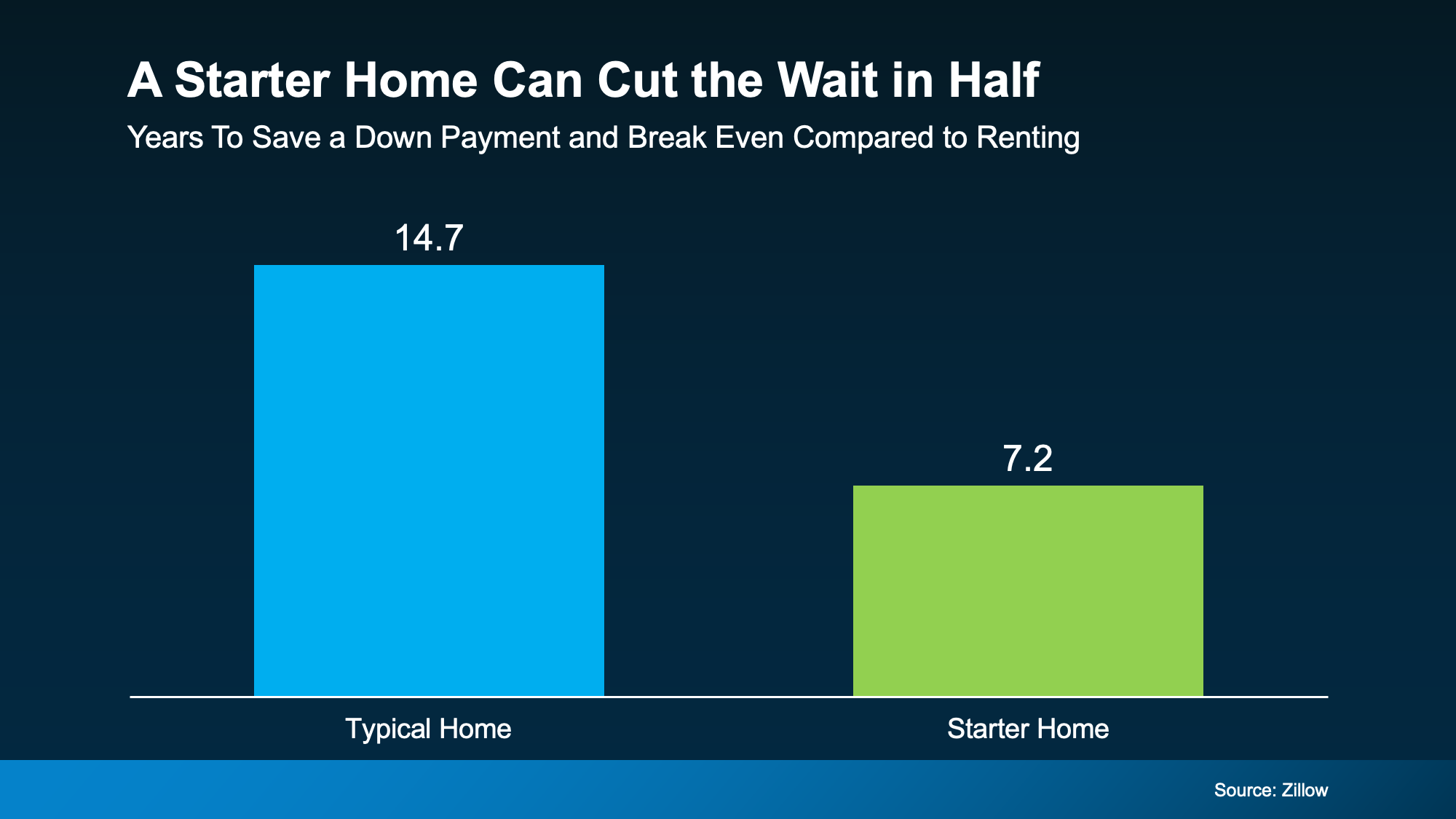
That comes out to about 4.6 years to save and another 2.6 years to break even. It won’t solve every affordability challenge, but it could take years off the wait. And if you’ve already been saving, you may be closer to making homeownership a reality than you think.
You Usually Don't Need To Put 20% Down
Like many first time buyers, you might think you need a 20% down payment before you can even consider buying a home. But in many cases, that’s simply not true.
Most first time buyers put down much less than that. According to the National Association of Realtors, the median down payment for first time buyers is just 10% (see graph below):
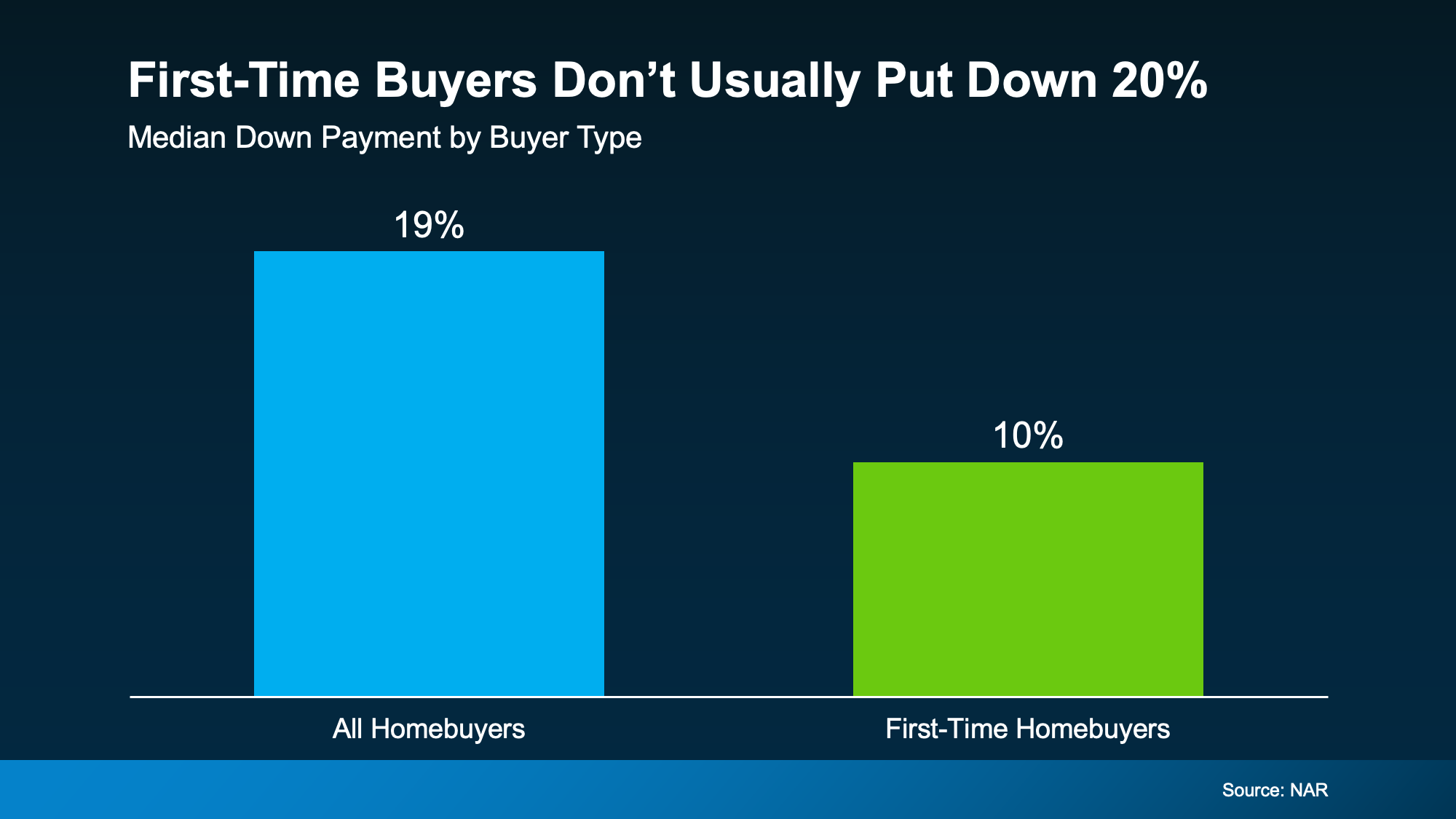
And the minimum can be even lower. Some buyers can put down as little as 3% with a conventional loan or 3.5% with an FHA loan. Eligible veterans and buyers in certain rural areas may even qualify for zero down.
There’s also help available with the upfront costs of buying a home. Down Payment Resource lists 2,746 assistance programs nationwide, and some can even be combined:
““Some homebuyers can layer multiple sources of assistance to reduce their upfront costs. Layering means combining more than one eligible source of funding as part of your home purchase.”
”
Combine a lower price point, a smaller down payment, and assistance with upfront costs, and that timeline can shrink much faster than you might expect.
Bottom Line
Your first home might be closer than you think. If the numbers work for you, choosing a starter home and putting down less than 20% could help you become a homeowner years sooner.
Want to see which starter homes in your area might fit your budget? Let’s connect and explore your options.