If you’re waiting for mortgage rates to drop significantly before buying, you could be waiting longer than you think. But don’t get discouraged. There’s a number working in your favor right now called the spread. Once you understand it, you may look at today’s mortgage rates in a whole new way.
The Pattern That’s Held for 50+ Years
Mortgage rates don’t move on their own. They usually follow the 10 year Treasury yield, which reflects how investors feel about the economy.
It’s not an exact science because other factors can affect it from day to day. But generally, when the economy looks strong, the yield tends to rise. When the outlook becomes uncertain, it usually comes down. For more than 50 years, the 10 year Treasury yield and mortgage rates have closely followed each other, as the graph below shows.
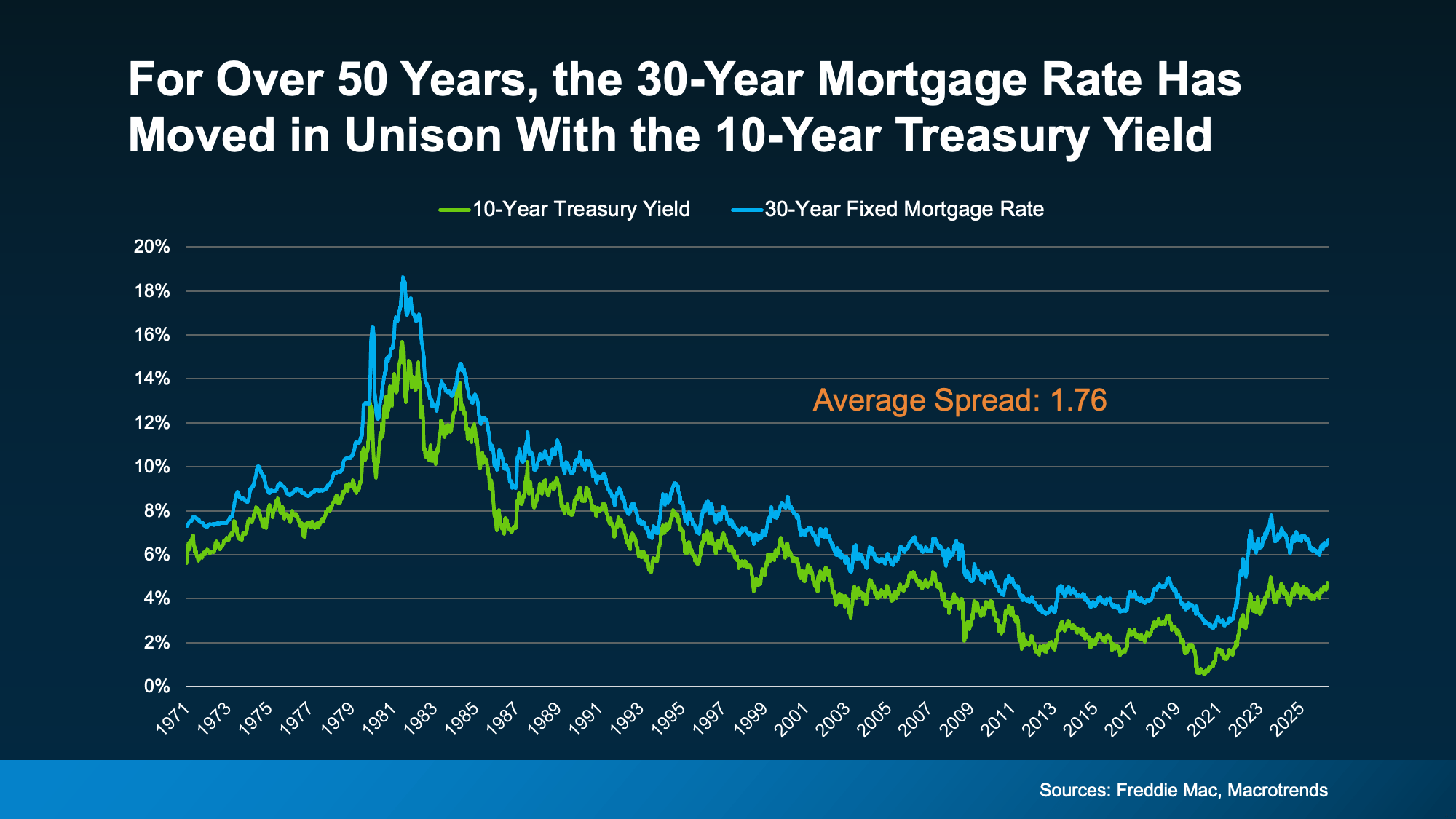
The difference between the two is called the “spread.” On average, it’s about 1.76 percentage points, and it plays a big role in your mortgage rate. When the spread is wider, mortgage rates tend to be higher than the Treasury yield would suggest. When it’s narrower, mortgage rates stay closer to the Treasury yield.
One of the Big Reasons Rates Likely Won’t Drop Dramatically Anytime Soon
If you’re hoping mortgage rates will drop significantly, here’s the reality: that may not happen anytime soon. One big reason is the spread between the 10 year Treasury yield and mortgage rates.
A few years ago, that gap grew significantly as economic uncertainty pushed the spread as high as 3.19 percentage points in 2023.
Now here’s the good news: that gap has been getting smaller lately. It’s now around 2.01 percentage points, which is just above the long term average of 1.76, as the graph below shows.
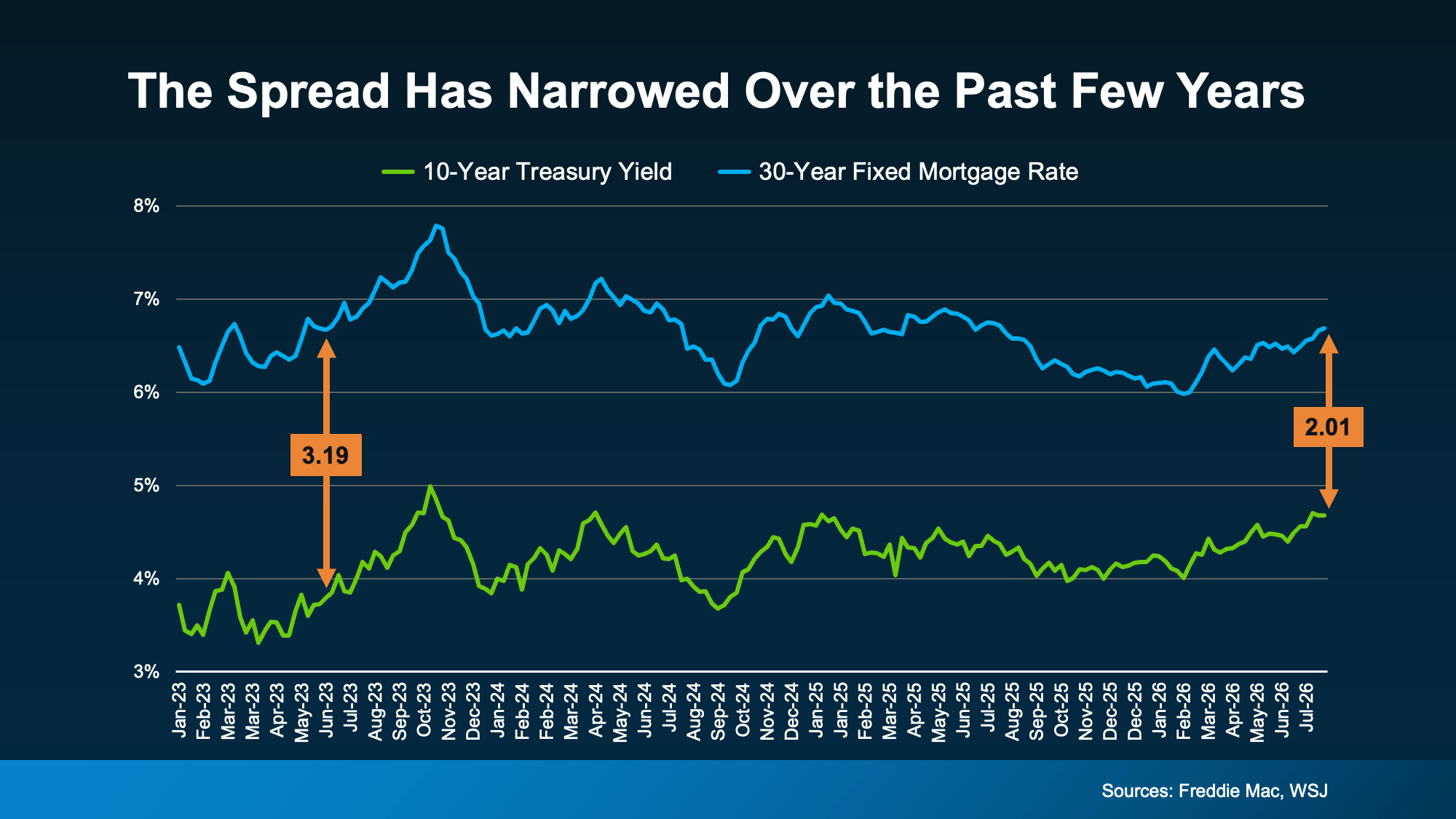
When the gap is wide, there’s more room for mortgage rates to come down. But with the spread closer to normal right now, there’s less room for rates to drop significantly.
Why Mortgage Rates Aren’t Higher Right Now
Today’s mortgage rate is essentially the Treasury yield plus the spread. So when either one changes, your mortgage rate can change too. Using today’s 10 year Treasury yield of 4.68%, here are three different rates that show just how much the spread can affect your bottom line, as the graph below shows.
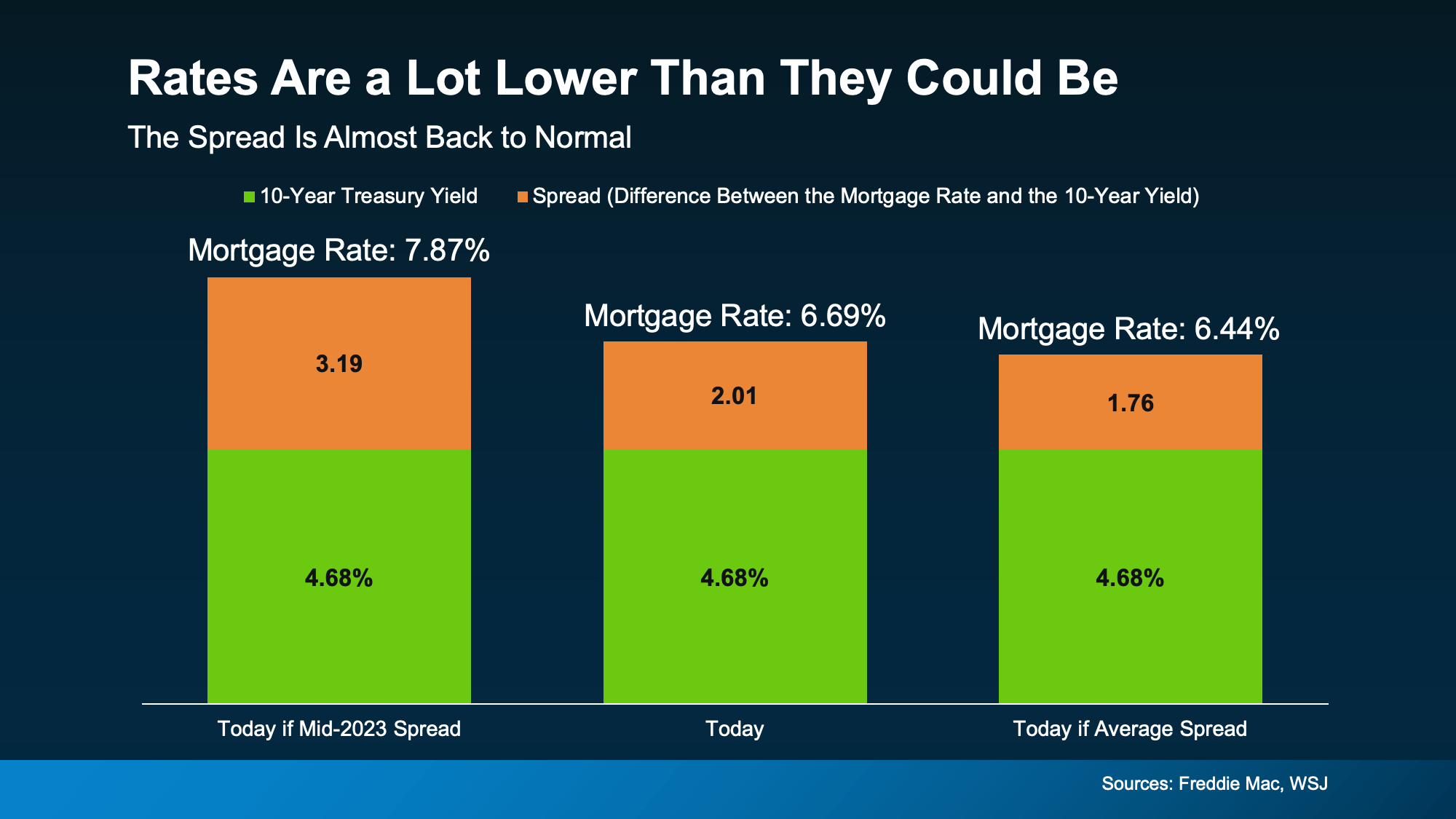
If the spread were still as wide as it was in 2023, mortgage rates could be close to 8% right now. That’s because the spread was more than a full percentage point higher than it is today.
But thanks to the spread narrowing recently, today’s mortgage rate is around 6.69%. That’s the middle scenario in the graphic. That can make a big difference in your monthly payment compared with what we might see if the spread were still as wide as it was in 2023. As Logan Mohtashami, Lead Analyst at HousingWire, put it:
““Of course, mortgage spreads being better in 2026 is the housing hero story of the year . . .”
”
Now compare that middle bar with the third one. If the spread were at its long term average, mortgage rates would be around 6.5%. That’s only about a quarter of a percentage point lower than where rates are today. So realistically, most of the improvement we could expect from the spread getting smaller has already happened.
In other words, the narrowing spread is a big reason mortgage rates aren’t close to 8% today, but it’s also why we shouldn’t expect rates to drop much further.
Bottom Line
That’s the tradeoff with a narrowing spread. Mortgage rates may not be exactly where you want them, but they’re still better than they could have been. If you want to see what today’s rates could mean for your monthly payment, talk with a local lender.