If you're thinking about buying a home, chances are you've been watching mortgage rates and home prices. But there's one more cost you don't want to overlook: homeowners insurance.
Homeowners insurance has always been part of owning a home. But over the past few years, it's become more expensive for many homeowners, making it even harder at a time when affordability is already a challenge.
The good news is that while homeowners insurance premiums are still going up, the latest data shows those increases are starting to slow. Here's what every homebuyer should know.
Home Insurance Costs Have Gone Up
You've probably heard friends or family mention that their homeowners insurance premiums have gone up. That's not surprising, especially since data shows that 71% of homeowners have seen their insurance costs increase over the past few years.
While no one likes higher costs, knowing what to expect can help you plan with confidence. Your first homeowners insurance payment is usually included in your closing costs, and after that, it becomes part of your monthly housing expenses.
Getting an insurance quote early can help you create a more accurate budget and avoid unexpected costs later in the homebuying process.
Premiums Are Rising, But Not as Fast as They Were
Most headlines focus on the fact that homeowners insurance is getting more expensive, and that's true. But there's another side of the story that often gets overlooked.
Homeowners insurance premiums are still going up.
But the good news is they're not increasing as quickly as they were before.
According to the latest report from Rate Insurance, 2025 marked the first time since 2019 that annual homeowners insurance premium increases began to slow. Take a look at the graph below.
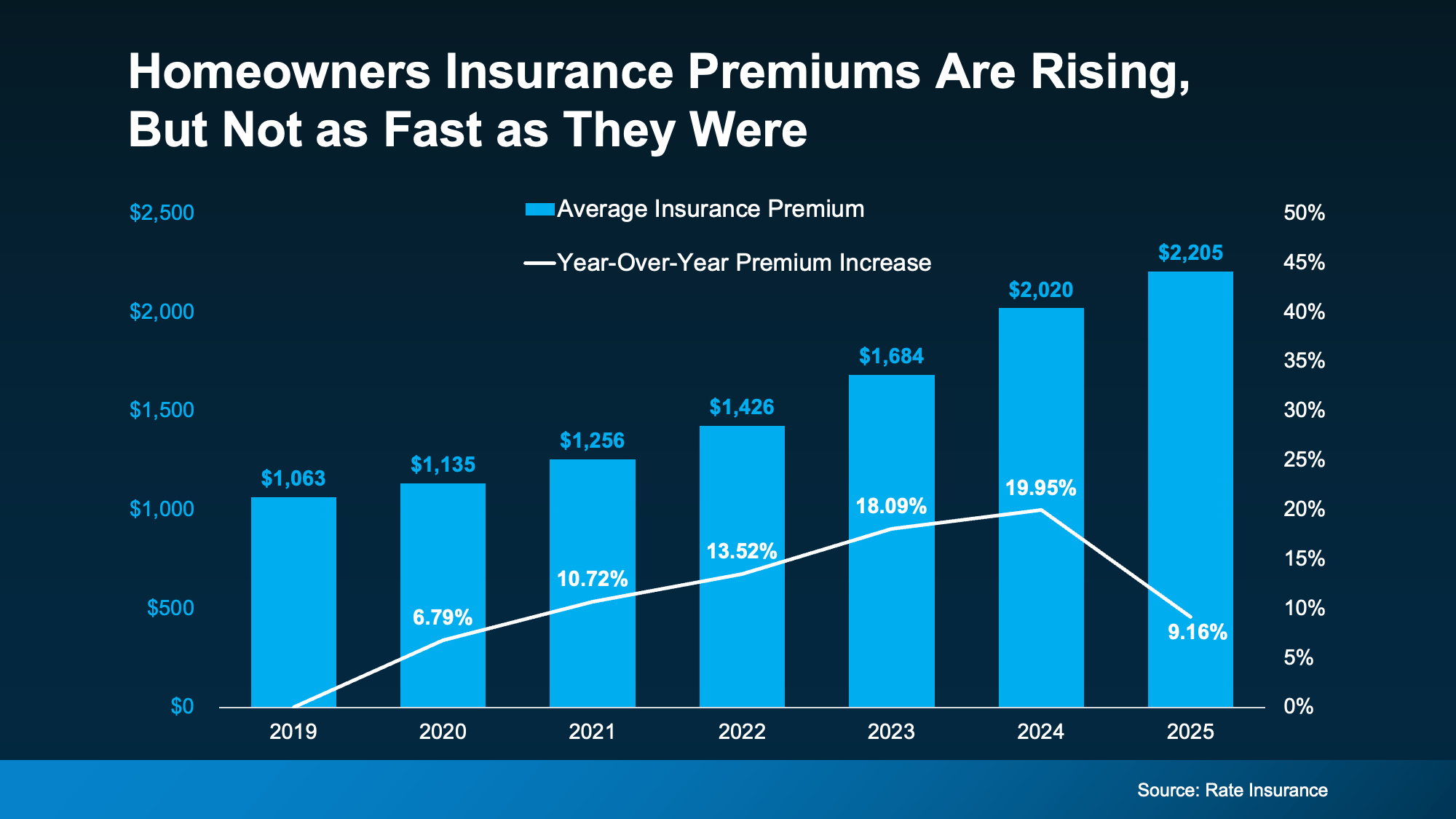
That doesn't mean homeowners insurance is getting cheaper. It just means the sharp increases we've seen over the past few years are finally starting to slow down, which is a small but encouraging step in the right direction.
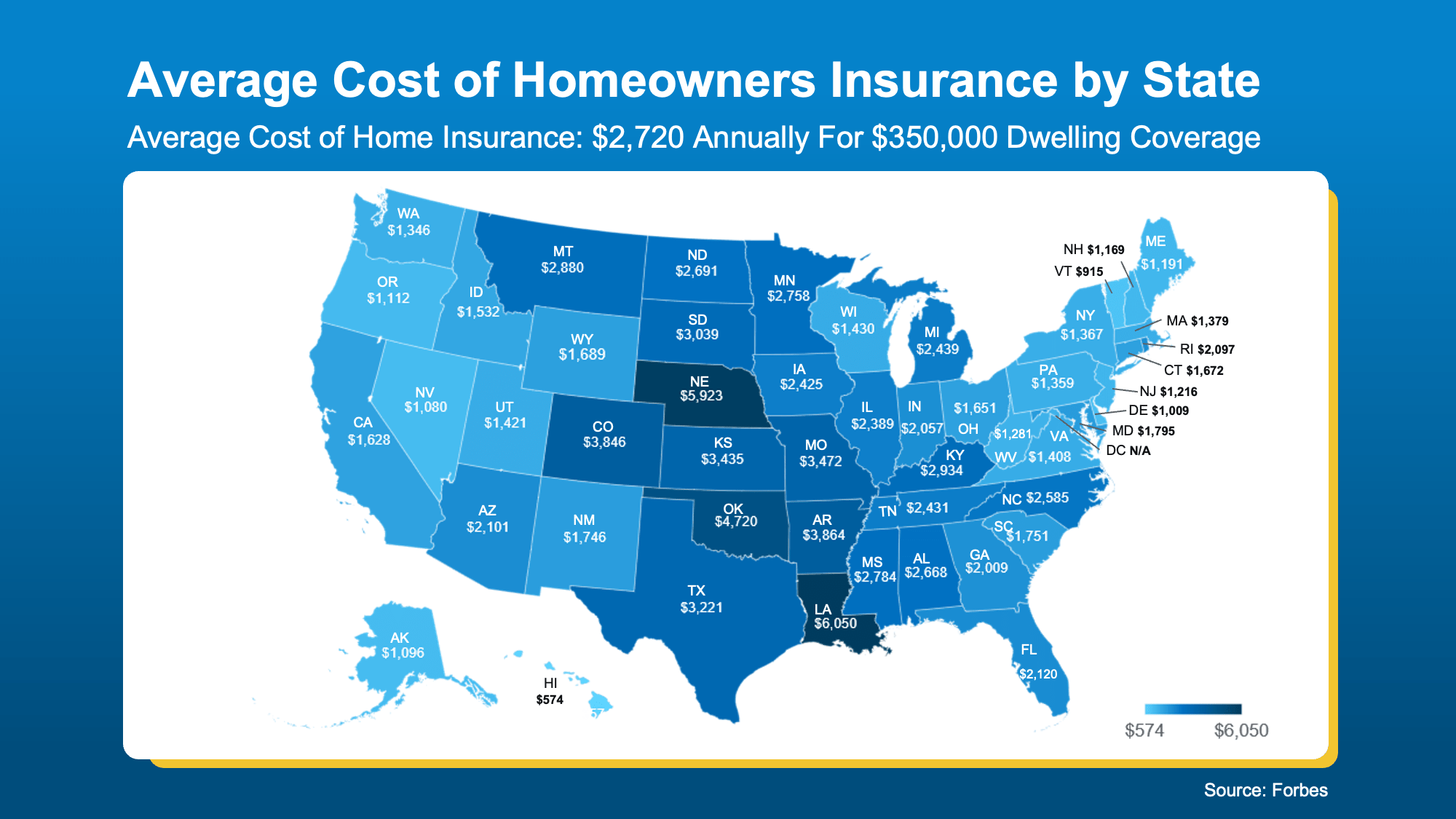
Keep in mind that what you pay for homeowners insurance can vary quite a bit depending on where you live.
Where You Buy Can Make a Big Difference
Insurance costs can vary from one area to another because some places experience more claims than others. That's why it's important to understand what's happening in your local market.
The amount you pay for homeowners insurance will depend on factors like where the home is located, the property's features, and the type of coverage you choose.
Data from Forbes can give you a general idea of what homeowners insurance typically costs in your state. Take a look at the map below. The darker the blue, the higher the average premiums tend to be.
Ways To Lower Your Costs
While you can't control every cost that comes with buying a home, you can control how prepared you are. If you're looking for ways to save, Insurify and NerdWallet recommend a few simple strategies:
• Shop around and compare quotes from several insurance companies.
• Bundle your home and auto insurance to see if you can get a lower rate.
• Ask about available discounts so you don't miss out on potential savings.
• Let your insurer know about upgrades like a new roof or storm windows, since they may help lower your premium.
• Work on improving your credit score because a stronger credit profile can often lead to lower insurance costs.
One of the best things you can do is get a homeowners insurance quote before making an offer. That way, you'll have a clearer picture of your monthly housing costs before you commit to buying the home.
An insurance professional can help you explore your options and find a policy that fits your needs and your budget.
Bottom Line
Homeowners insurance has become a more important part of the homebuying conversation, but it doesn't have to be a source of added stress.
The key is knowing what to expect before you buy. Get an insurance quote early, include it in your budget, and work with trusted local professionals who can help you make a confident, informed decision.