Data shows inflation is trending upward. Before the headlines cause panic, here’s what’s really happening, why it matters for the housing market, and what it means if you’re thinking about buying or selling.
Inflation Went Up – Here’s What That Actually Means
One way the government measures inflation is through the Personal Consumption Expenditures (PCE) Price Index. It tracks how much more or less people are spending on everyday goods and services compared to a year ago. And if you’ve been keeping an eye on your own grocery bills, gas prices, or monthly expenses, you probably already have a good idea of which direction it’s been moving.
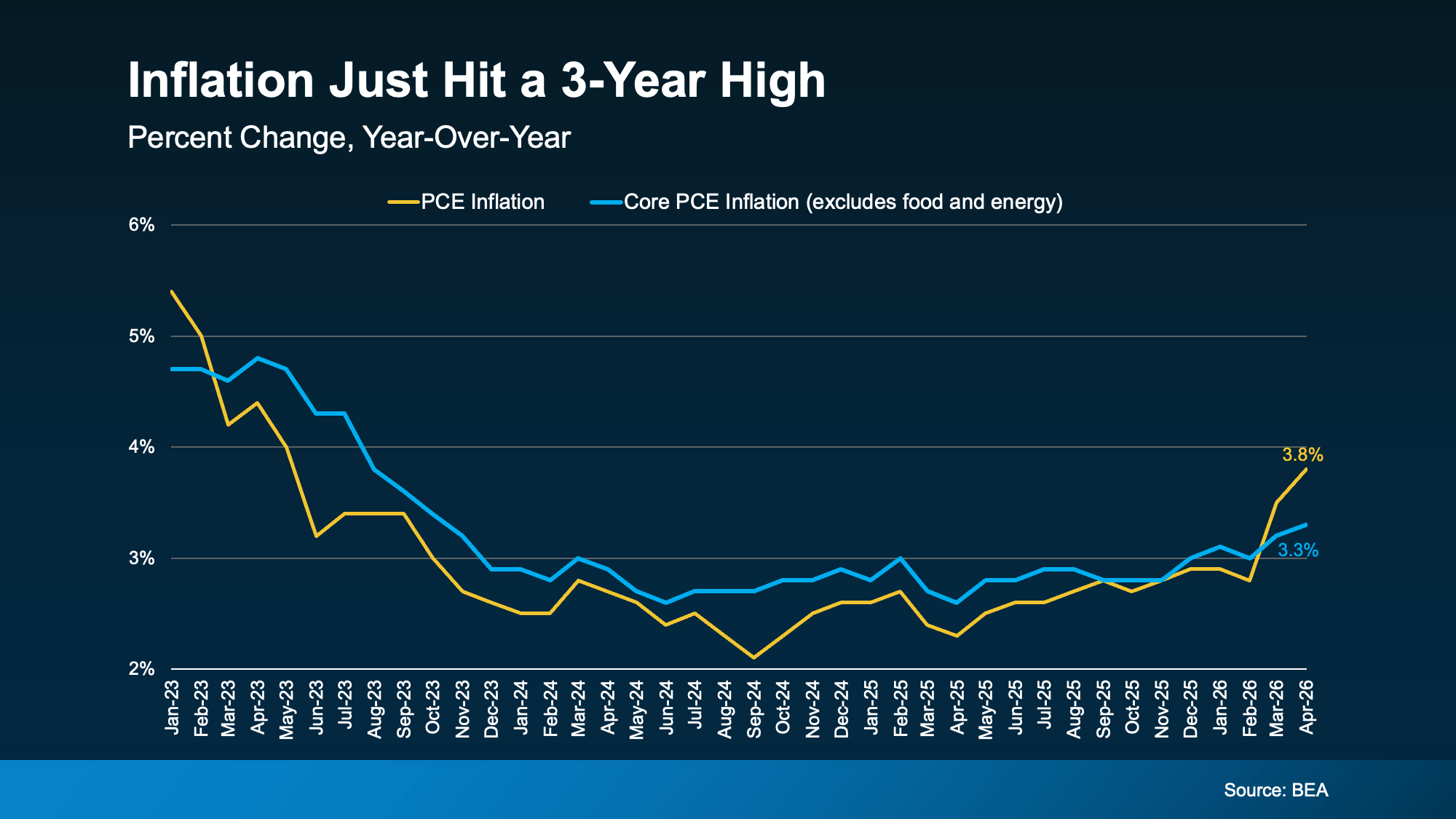
You may have noticed there’s a second line on the graph. The blue line represents Core PCE, which is the same inflation measure but without gas and energy prices included. The Federal Reserve pays especially close attention to this number because energy costs can fluctuate quite a bit, making it harder to see the underlying inflation trend.
And here’s the somewhat encouraging part.
Core PCE is still moving higher, but it’s not rising nearly as quickly as overall inflation. That tells us a large part of the recent spike is likely being driven by factors tied to events happening overseas. If those pressures begin to ease, inflation could start to cool down as well.
Why This Matters for Mortgage Rates
Here’s how it works: when inflation is high, the Fed usually keeps the Federal Funds Rate higher or raises it to slow spending and bring inflation down. That rate doesn’t directly set mortgage rates, but it often influences them, so you may see your mortgage rate move when the Fed changes its policy.
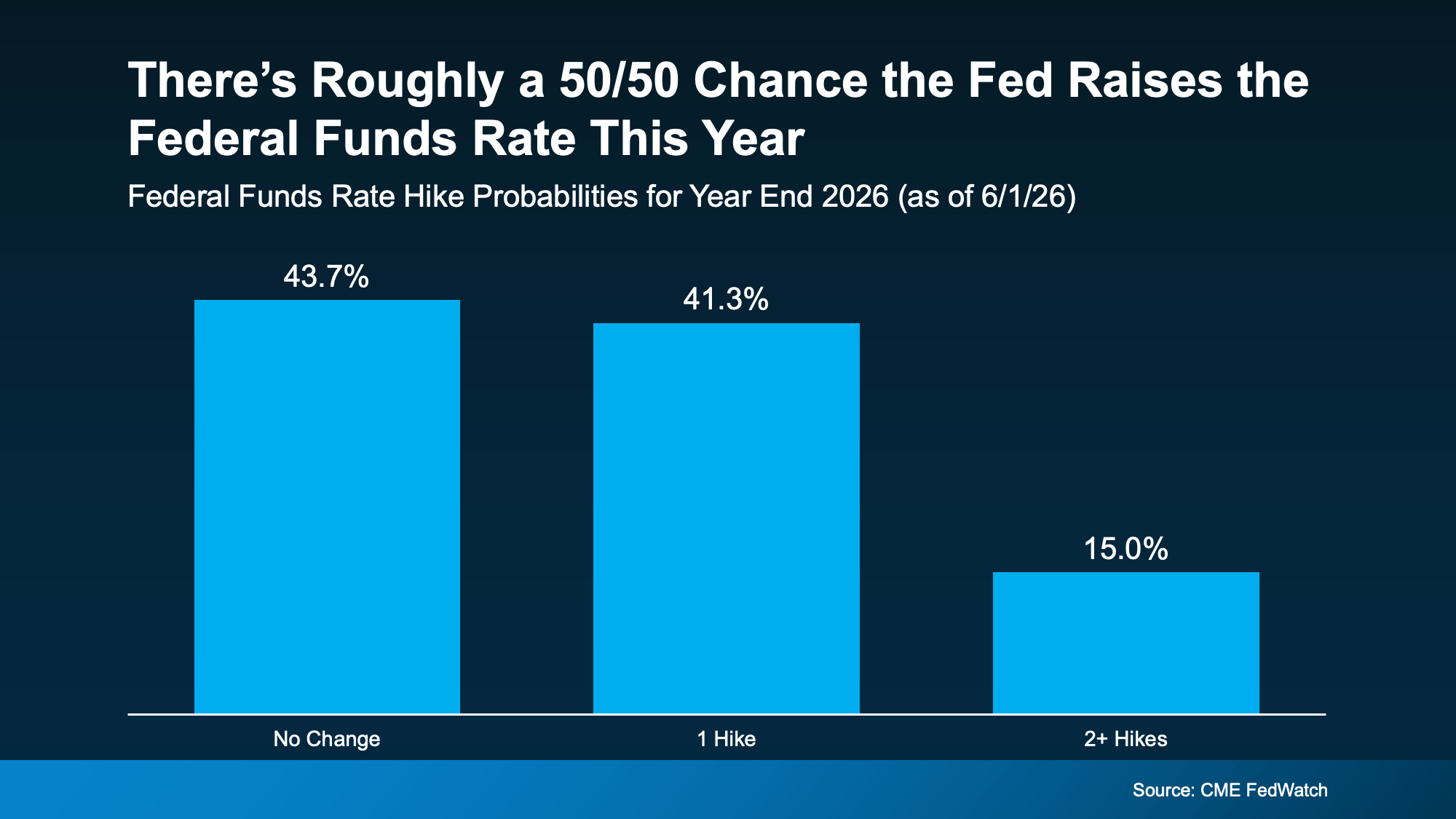
It’s still too early to know exactly where things will land or whether a rate hike is coming. But what it does suggest is that mortgage rates probably aren’t going to drop as quickly as many people were hoping.
If you’ve been holding out for a big drop in rates before making a move, this report is a good reminder that higher for longer is still very much a possibility. A lot of it will come down to how the economy plays out from here. According to Bankrate:
““Oil prices and bond yields have dropped a bit . . . but they’re still way up compared to the start of spring. Until there’s a resolution to the war, look for both inflation and mortgage rates to stay high.”
”
But This Is Not 2008 – Not Even Close
Just keep in mind, a tough economy doesn’t automatically mean a housing crash. The situation today looks very different from what caused the 2008 collapse. Here’s why:
Inventory is still fairly low, so there isn’t a surge of homes flooding the market
Most homeowners today have solid equity built up in their homes
Lending standards are much stricter than they were before 2008
The main issue right now is affordability, not a wave of distressed or underwater sellers
Uncomfortable and unhealthy aren’t the same thing. The market might feel tough right now, but “tough” and “crashing” are two very different situations.
You Still Have Options. Here’s What To Do.
High rates don’t mean owning a home is off the table. It just means the path to getting there might look a little different right now. There are still practical strategies that can help depending on your situation:
Talk with your lender about different loan options. Adjustable-rate mortgages or rate buydowns could help bring your monthly payment down in the short term
Look into first-time buyer programs, down payment assistance, or seller concessions that may help reduce your upfront and ongoing costs
Stay connected with a trusted agent and lender, so you’re ready to act when rates change, because they will move over time
Having the right strategy that fits your goals matters a lot more than waiting for a perfect moment that may never actually show up.
Bottom Line
Inflation is still running above the level the Fed is aiming for, which is why mortgage rates are likely to stay higher for a while. But if you need to move, having the right strategy matters a lot more than trying to perfectly time the market.
If you’re wondering what this means for your situation, reach out today. We can go through it together and figure out a plan that actually makes sense for you.