You’ve probably heard that home prices are starting to cool off, and that’s true on a national level. But when you take a closer look at local markets across the country, it’s a whole different story. What’s happening with home prices really depends on where you live.
Some areas are still seeing steady home price growth, while others have leveled off. A few have even seen prices dip a bit. So, what’s behind the difference?
It All Comes Down to Inventory
Here’s the simple version.
When there are more homes for sale, buyers have more options.
With more choices, there’s less competition.
And when competition slows down, sellers have a harder time pushing prices higher.
When there aren’t many homes for sale, buyers end up competing for the same few properties, and that drives prices higher.
That dynamic is showing up very clearly all across the country.
Markets where the number of homes for sale has returned to, or even gone above, pre pandemic levels are seeing prices level off or dip slightly. But in places where inventory is still well below 2019 levels, home prices are continuing to rise. As Lance Lambert, CEO of ResiClub, explains:
““Home prices are still climbing a little year-over-year in many regions where active inventory remains well below pre-pandemic 2019 levels, such as pockets of the Northeast and Midwest.
In contrast, some pockets in states like Texas, Florida, and Colorado — where active inventory exceeds pre-pandemic 2019 levels by a solid clip — are seeing modest home price pullbacks or flat pricing.”
”
The Maps Say It All
Take a look at how today's inventory compares to 2019. In most places, inventory is still lower than it was back then. That’s a big reason why home prices are still rising in most states, even if the pace of growth has slowed down.
But you're probably wondering about the places where home prices have started to dip since that's what's making the headlines. So let's take a closer look at how inventory is affecting prices in those markets.
According to Realtor.com, 15 states and Washington, D.C. now have more homes for sale than they did before the pandemic. In some of those areas, inventory has increased by a significant amount, as shown in orange on the map below.
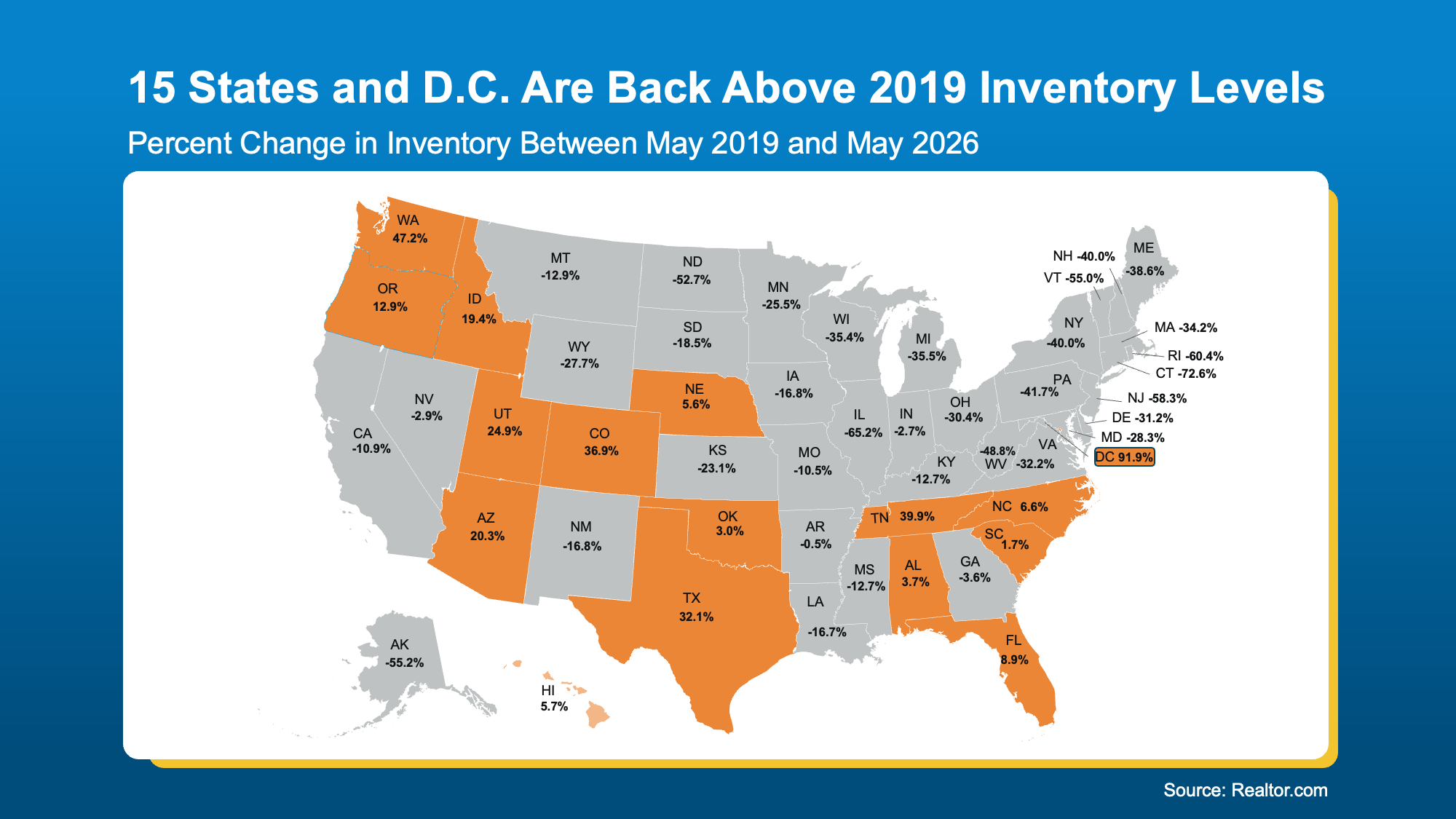
Now, let’s look at the latest Federal Housing Finance Agency (FHFA) data to see how home prices have changed in those same states over the past year. As you check out the next map, pay close attention to the states highlighted in orange.
See how those match up pretty closely with the neighborhoods that have more homes for sale right now?
That overlap isn't just a coincidence. It's the result of how inventory affects home prices.
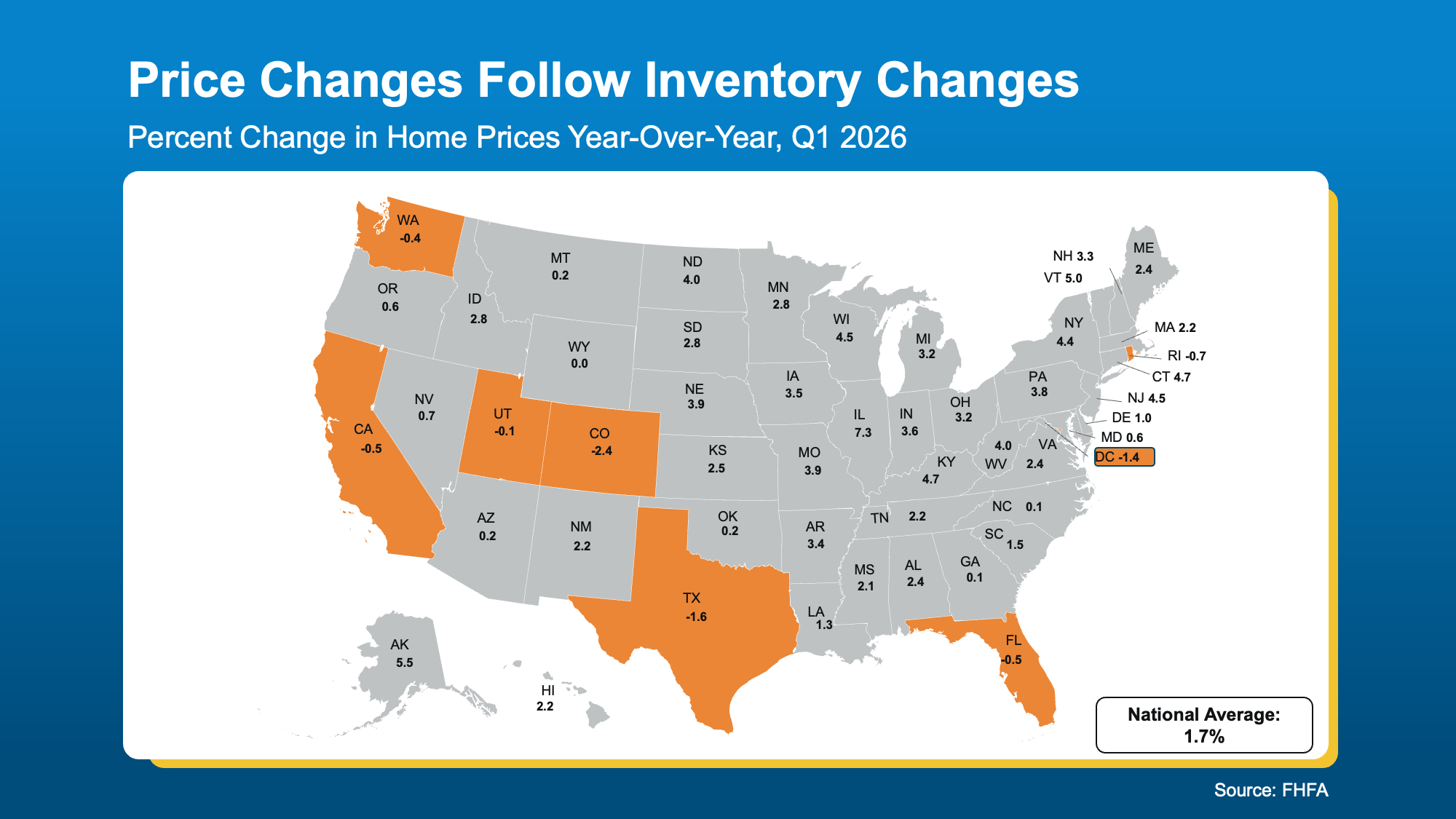
The national average of 1.7 percent price growth is accurate, but it only tells part of the story. It combines two very different trends. A small number of markets are seeing slight price declines, while the vast majority are still seeing home prices go up.
What This Means If You’re Buying or Selling
If you're buying a home, where you're looking matters more than ever right now. In places like Texas, Colorado, or Florida, you may have more room to negotiate because there are more homes to choose from, less competition, and sellers who are more willing to make a deal. But in tighter markets, especially across much of the Northeast, buyers are still facing plenty of competition.
If you're selling your home, pricing it right is more important than ever. In markets where inventory has gone up, asking too much can cause your home to sit on the market longer and may even lead to a lower final sale price. In areas where inventory is still low, you're in a great position, but setting the right price is still key if you want to attract serious buyers quickly. No matter what market you're in, that's where a local real estate agent can make all the difference.
Bottom Line
When it comes to home prices, location matters more than ever. A local real estate agent can help you understand what's happening in your market so you can make the best decision.
Get in touch today, and let's put together a plan that works for your local market.