When your house doesn’t sell, it’s more than disappointing; it throws off your timing, disrupts your plans, and chips away at your confidence. You begin to second-guess everything, even the choice to move. That brings up two big questions:
Would you like to try again?
Is that really worth it?
The key to getting a better result the second time around is learning from the first experience and making smarter moves along the way.
Different Agent. Different Results.
Most sellers who re-list and eventually sell don’t wait for the market to change they change their approach. And the data supports that.
Research from REDX found that homeowners who relisted their home with a new agent were more likely to get it sold than those who stuck with the same agent. On top of that, their homes tended to sell faster too (see graph below).
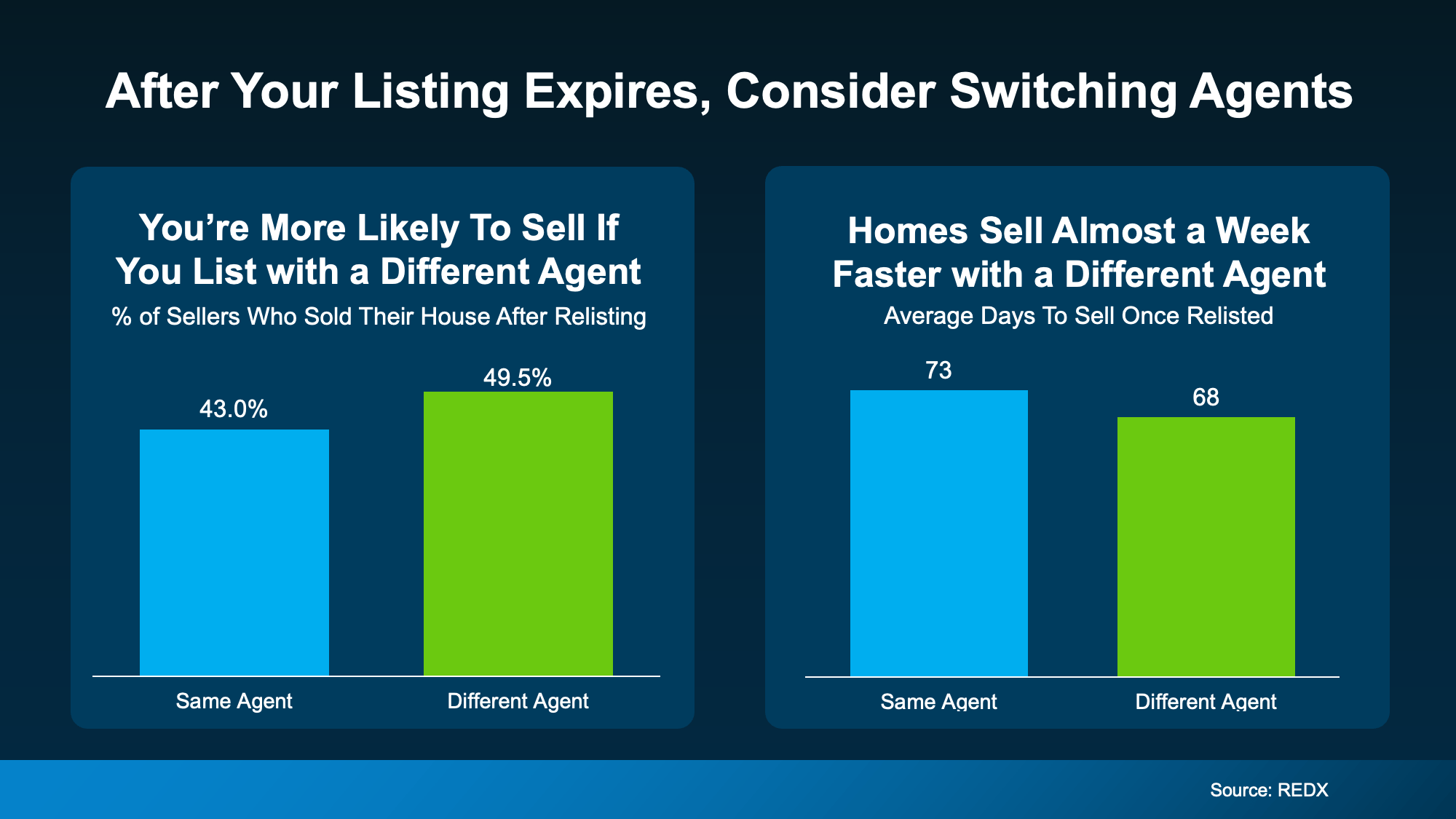
That’s the value of a fresh perspective. When a home doesn’t sell, repeating the same strategy rarely leads to a different result. A new agent can take a closer look at what may have gone wrong and identify opportunities that were missed the first time around. In many cases, it comes down to one of these common issues.
1. The Asking Price Didn’t Match THE Buyer Reality
There’s a common saying in real estate that rings especially true in today’s market: if the price doesn’t grab buyers’ attention, the home won’t sell. That could be exactly what happened with your house.
With mortgage rates still elevated and inflation making everyday expenses more expensive, buyers have less flexibility in their budgets. If they think your home is priced even slightly above market value, they’re likely to move on to the next listing. And if buyers aren’t stopping to take a look, the home isn’t going to sell.
The Fix: Price your home to attract buyers, not turn them away. A good agent can review the latest sales in your area and help you set a price that reflects what buyers are actually willing to pay in today’s market.
2. The First Impression Didn’t Win the Click
Most buyers decide within seconds whether a home is worth seeing in person. If the photos look dark, outdated, or uninviting, they’ll likely keep scrolling. You might think, “If they could just see it in person, they’d love it,” but if the photos don’t grab their attention, they may never schedule a tour.
And even once buyers step inside, little things can quietly work against you. Peeling paint, outdated fixtures, cluttered spaces, or a yard that looks like a lot of work may not seem like major issues on their own. But when buyers notice several of them at once, it can make them second-guess the home.
The Fix: Try looking at your home through a buyer’s eyes instead of your own. Focus first on the simple improvements that make the biggest impact, like fresh paint, better lighting, improved curb appeal, and decluttering. Once those updates are done, refresh your listing photos so they showcase your home at its very best.
3. The Marketing Was Too “Set It and Forget It”
Today, buyers have more homes to choose from in many markets. That means your home needs a strategy to stand out from the crowd. If your listing has a generic description and is simply posted to the MLS, it can easily get lost among all the other options.
The Fix: Work with an agent who knows how to get your home in front of the right buyers. That means using digital marketing, social media, and compelling content that grabs attention. High-quality photos, a well-written description, a video tour, and a solid plan for open houses and follow-up can make a big difference in helping your home stand out.
4. There Was No Clear Plan for Feedback
Sometimes a home gets plenty of showings but still doesn’t receive any offers. If that happened to you, it actually reveals something important. Buyers were interested enough to schedule a visit, which means the listing did its job. The real issue is that something about the home or the experience caused them to hesitate once they got there.
Those buyers were trying to tell you something. The feedback was there, it just never turned into an offer.
The Fix: Work with an agent who has a process for gathering feedback and responding to it quickly. Buyer feedback can be incredibly valuable and often reveals the one adjustment that could make all the difference in getting your home sold.
5. The Deal Couldn’t Get Over the Finish Line
Even when a home is priced correctly and marketed effectively, a sale can still fall through if there isn’t a solid plan for managing the people and emotions involved in the process.
Buyers today are more likely to ask for repairs, seller credits, or help with closing costs than they were a few years ago. In a market like this, being too rigid during negotiations can end up costing you more than making a reasonable concession to keep the deal moving forward.
The Fix: Before negotiations begin, decide what’s most important to you and where you’re willing to be flexible. Keep communication open throughout the process and rely on your agent’s guidance to help you make informed decisions and keep the deal on track.
Bottom Line
If your home didn’t sell the first time around, that doesn’t mean you’re out of options. It may simply be time for a new approach and the right professional to help guide the way.
When you're ready for a fresh perspective on what may have gone wrong and what steps could make the biggest difference, let’s connect.