One of the biggest concerns buyers have right now? “What if I buy a home . . . and prices drop after?”
With everything happening in the news, it’s easy to see why people feel that way. No one wants to make a major financial move at the wrong time. But don’t let the small price dips happening in a few areas keep you from seeing the bigger picture.
When you take a step back and look at the bigger picture, home prices tend to go up over time.
What the Data Really Shows
Take a look at the visual below. It uses data from S&P CoreLogic Case-Shiller Indices and Charlie Bilello to show how home prices have changed year after year all the way back to the 1950s.
Here’s the key takeaway.
Aside from the housing crash, home prices have stayed steady or gone up in almost every year for decades (see visual below):
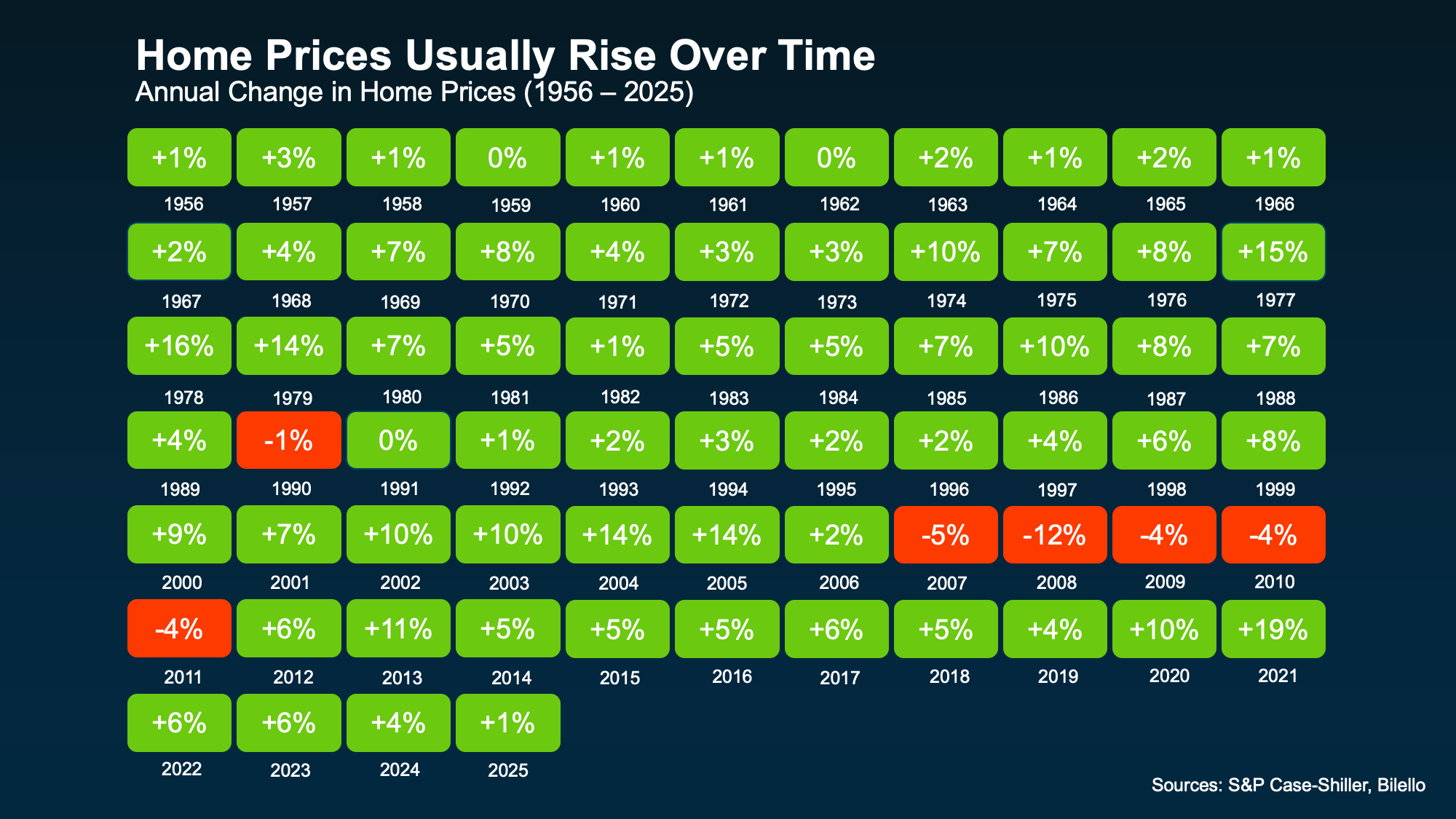
That’s a pretty consistent track record, and it highlights something a lot of headlines tend to miss.
While there can be short-term ups and downs, it’s the long-term growth that really counts.
Why Prices Tend To Rise Over Time
There are a few main reasons home prices tend to rise over time:
There are always people who need to move. Life changes like jobs, families growing, or downsizing mean housing demand never really goes away. It may slow down at times, but people will always need homes, which keeps demand steady.
There still aren’t enough homes for sale. Even though inventory has improved in some areas, there’s still a shortage compared to buyer demand in many markets. That imbalance helps support higher prices.
Inflation plays a role. As the cost of everyday goods and services rises over time, home values tend to rise too.
What That Means for You as a Buyer
It’s easy to focus on what might happen with home prices next month or next year, especially if you’re a first-time buyer and feeling a bit nervous about such a big decision. But when you look at the bigger picture, prices usually rise over time.
That doesn’t mean prices go up every single year in every market. Real estate is local, and there can definitely be short-term ups and downs. We’re already seeing that in some areas right now, and you can even spot a few yearly dips in the visual above.
But historically, those declines have only been temporary.
That’s why it’s usually suggested to only buy a home if you plan to stay for a while, typically at least five years. That gives your home time to build value and also helps you get through any short-term changes in the market.
Because when you’re able to do that, something powerful happens. Rising home values start to grow your net worth and, in turn, help you build wealth.
The right decision isn’t about perfectly timing the market. It’s about choosing a move that fits your life and staying in it long enough to benefit from the bigger long-term trend.
Bottom Line
Home prices have a long history of rising over time, which is why buying a home is often seen as a solid long-term investment.
That doesn’t mean you have to buy right now. The key is only making a move when it fits your situation, and you’re planning to stay there for a while.
But if you’re thinking about it, take this as reassurance. And if you want to go over what home prices are doing in our market, your goals, or your timing, let’s have a quick chat.