You’ve probably seen the headlines saying “foreclosures are on the rise”, and maybe your mind immediately went back to 2008. That makes sense. A lot of people still remember the crash and all the foreclosures that followed, and no one wants to see something like that happen again.
But this isn’t a repeat of what happened back then. Let’s take a look at the bigger picture so you can see why.
Foreclosures Are Rising, But They’re Still Historically Low
Yes, foreclosure filings are up 26% compared to last year, according to ATTOM. And they’ve now increased for five straight quarters, so it’s definitely something to keep an eye on. But when you zoom out and look at the full picture, it’s not nearly as alarming as the headlines make it sound.
Here’s something important to keep in mind when you look at that chart. The unusually low numbers in 2020 and 2021 aren’t what a “normal” market looks like. That was when the government paused foreclosures to help homeowners during the pandemic. Those years were the exception, not the standard.
Instead, it makes more sense to compare today to 2017, 2018, and 2019, which were the last years the market was running more normally. Even now, the numbers are still lower than they were back then. So we’re not even back to typical levels yet, which is why this really can’t be called a crash. You can see that in the graph below.
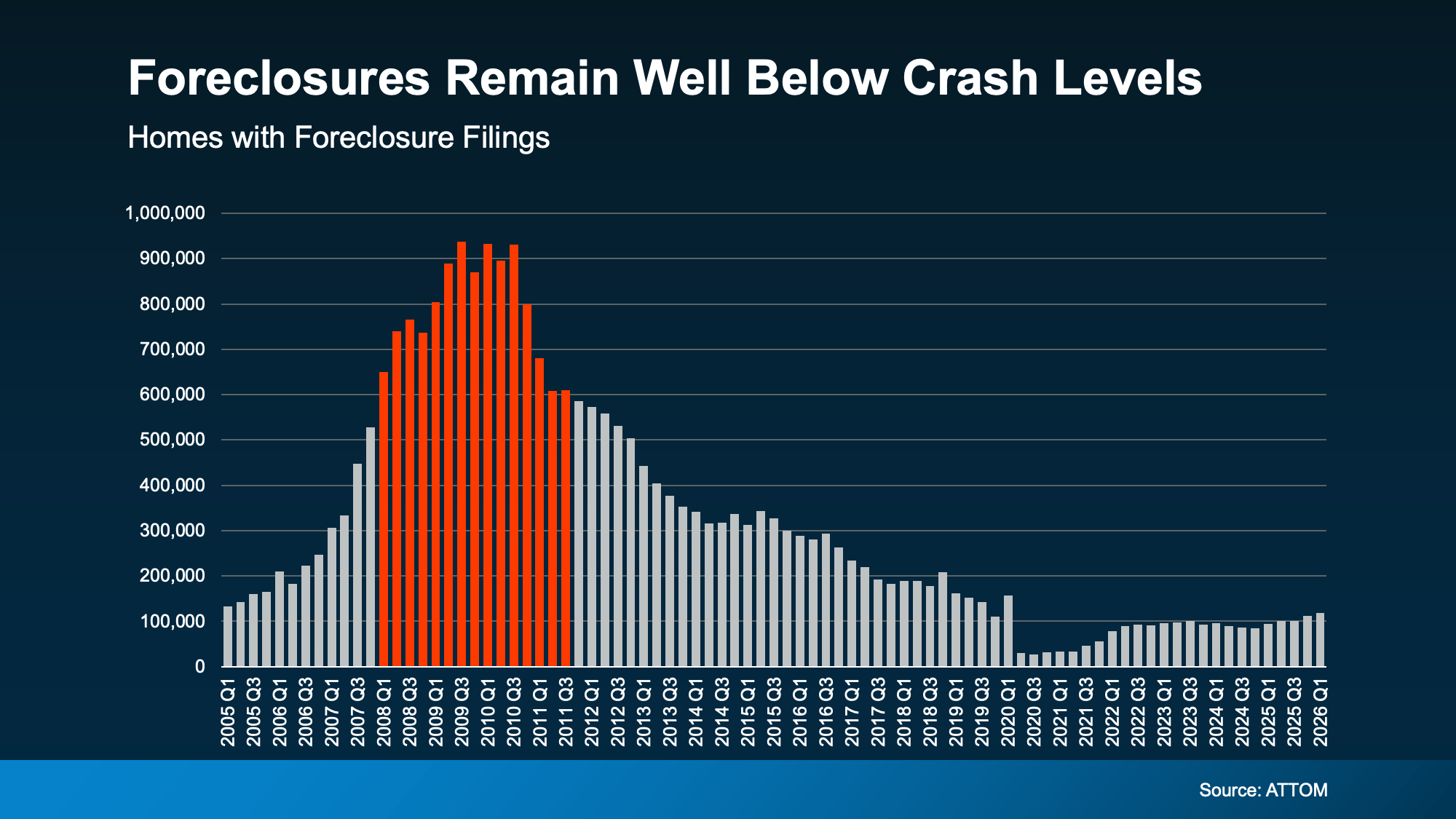
While today’s numbers are getting closer to what we saw before the pandemic, they’re still below long-term historical averages. And when you compare it to 2008, the difference is huge. Even with the recent increase, we’re nowhere close to those levels. This is the market moving back toward normal, not heading toward a crisis.
Why Today’s Equity Picture Changes Everything
Most of those filings won’t actually turn into completed foreclosures. That’s because today’s homeowners have something most people didn’t have back in 2008, and that’s equity.
The average homeowner today has about $295,000 in home equity, according to Cotality. Back in 2008, a lot of people were actually underwater on their mortgages, meaning they owed more than their homes were worth. Selling wasn’t really an option for them, so foreclosure often felt like the only way out.
Today, that’s not the situation for most people. If you have enough equity to cover what you owe and the costs of selling, you can sell your home, pay off your mortgage, protect your credit, and even walk away with some money in your pocket.
That’s a very different situation from what homeowners were dealing with during the last crash, and it’s a big reason we’re not likely to see foreclosures spiral as they did back then.
Check out the graph below. It shows foreclosure data from ATTOM going all the way back to 2005. Here’s how to read it:
The yellow line shows all foreclosure filings
The orange line shows foreclosure starts, which means the process has officially begun
The red line at the bottom shows completed foreclosures, meaning the homes where owners actually ended up losing the property
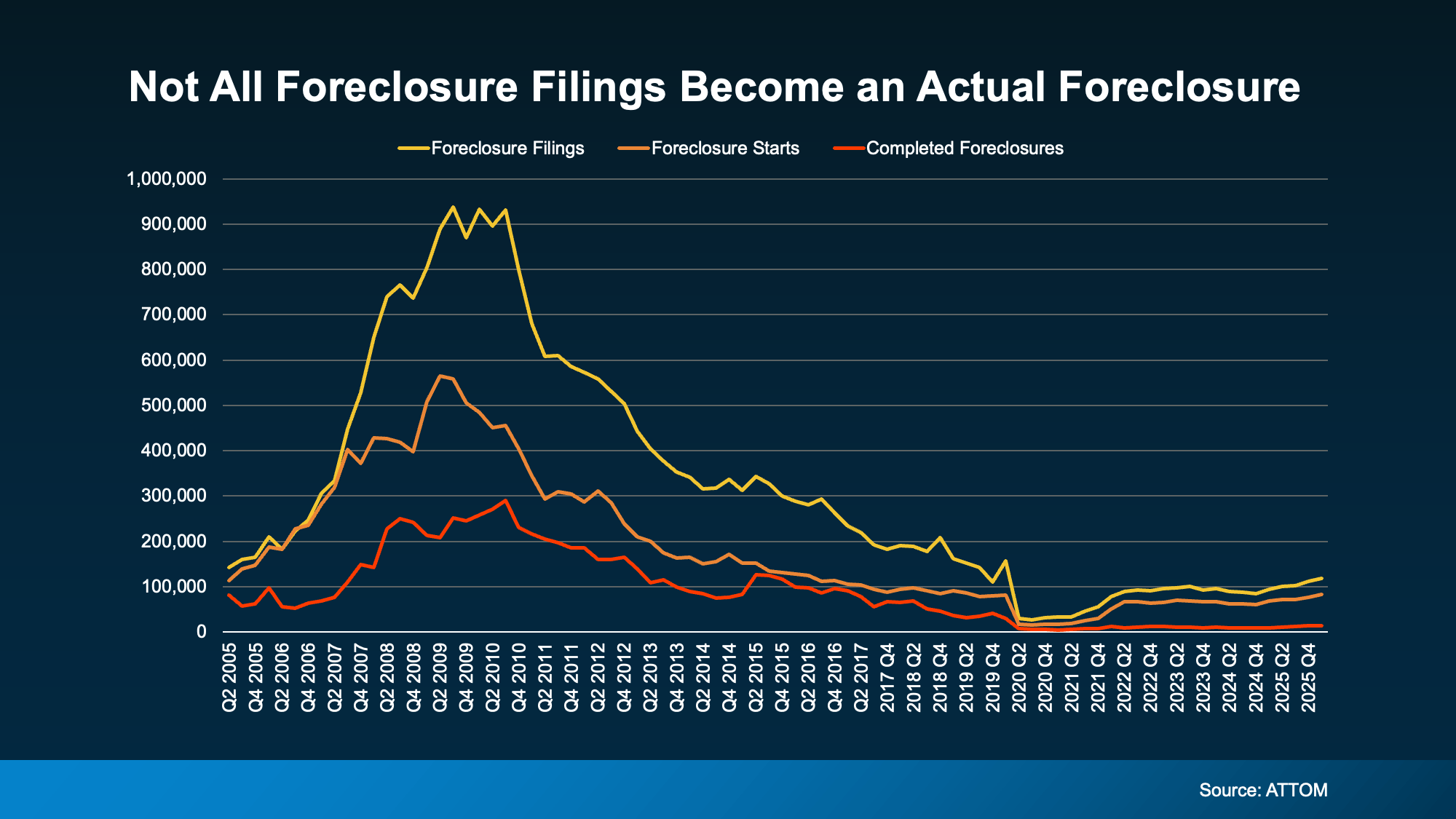
See how the red line stays well below the other two? That gap really tells the story. Many homeowners who enter the foreclosure process don’t actually end up losing their homes because they’re able to find another solution before it gets that far.
Today’s equity plays a big role in that. Because of it, not all of the filings we’re seeing right now will actually turn into foreclosures.
If You’re Struggling, You Have More Options Than You Think
Maybe you’re behind on payments or feeling stressed about what’s coming next. That’s a really tough place to be, but missing a payment or two doesn’t automatically mean you’re going to lose your home.
Banks usually prefer to work with you rather than go through foreclosure. It’s a complicated and expensive process for them as well. In many cases, they’re open to setting up a repayment plan, offering forbearance which is a temporary pause or reduction in payments, or even modifying your loan to make your payments more manageable over the long term.
Just know that the sooner you reach out to your lender, the more options you’ll likely have. In some states where foreclosures don’t have to go through the courts, the process can move more quickly than people expect. Getting ahead of it early gives both you and your lender more room to work out a solution.
And if selling ends up making more sense for your situation, a real estate agent can help you figure out what your home is worth and whether that’s a path worth considering.
Bottom Line
Foreclosure filings may be rising, but they’re still relatively low. And the amount of equity most homeowners have today is a big reason this situation looks nothing like 2008.