Mortgage rates have been fluctuating lately, which can make planning a home purchase more challenging. Still, there are steps you can take to secure the best rate possible in today’s market — and it begins with having the right information.
So what’s driving the rate increases, and what can you do about them? Let’s take a closer look.
Mortgage Rate Volatility Is Normal
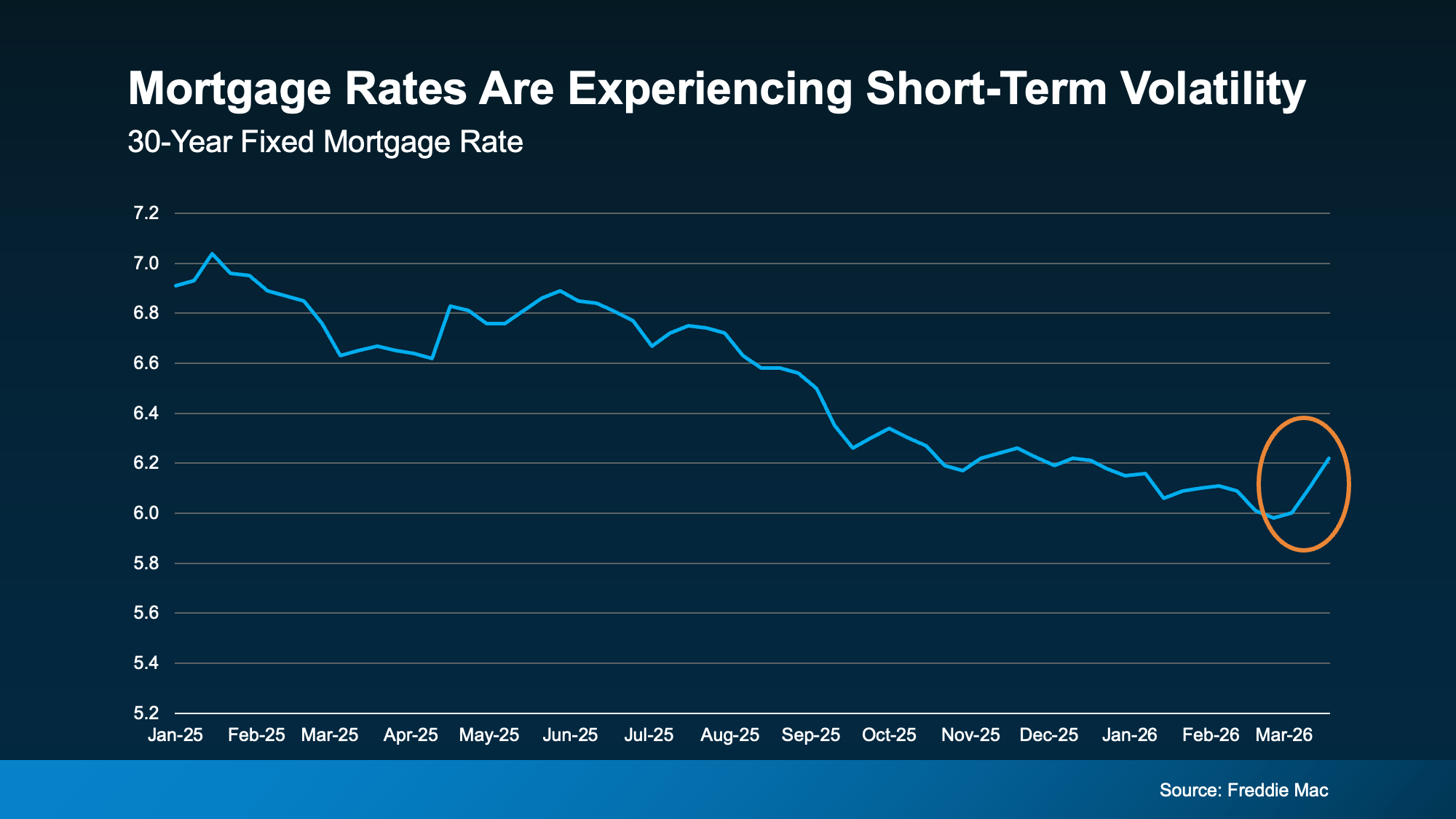
Data from Freddie Mac shows recent volatility. After more than a year of declining rates, they ticked up this month (see graph below).
While it’s easy to get distracted by all the changes, remember this.
It’s normal for rates to move up and down occasionally. If you look at the graph, you’ll notice that even within the past year there were times when rates climbed a bit. We’re in one of those periods now, so it’s important to be aware.
Especially during times of economic uncertainty or major global events, this kind of volatility is to be expected. As Investopedia explains:
““Mortgage rates don’t move in isolation. When global events inject uncertainty into financial markets . . . that can ripple through to borrowing . . . mortgage costs can respond quickly to geopolitical developments. As long as uncertainty remains elevated, rate swings may continue.”
”
And that’s why trying to time the market isn’t a smart move. You can’t control mortgage rates, but you can take steps to lock in the best rate available today. Focus your effort on these areas.
You can’t control where mortgage rates go. But you’re not powerless either. There are still smart moves you can make to lock in the best rate possible in today’s market. Here’s where to focus.
Your Credit Score
Your credit score has a major impact on the interest rate you qualify for. Even a small increase can noticeably lower your monthly payment. As Bankrate notes:
““Your credit score is one of the most important factors lenders consider when you apply for a mortgage. Not just to qualify for the loan itself, but for the conditions: Typically, the higher your score, the lower the interest rates and better terms you’ll qualify for.”
”
Keep your credit score in good shape. If you don’t know your score or how to improve it, talk with a trusted loan officer.
Your Loan Type
There are several types of home loans, and each comes with its own set of requirements, benefits, and interest rates for eligible buyers. The Consumer Financial Protection Bureau (CFPB) explains:
““There are several broad categories of mortgage loans, such as conventional, FHA, USDA, and VA loans. Lenders decide which products to offer, and loan types have different eligibility requirements. Rates can be significantly different depending on what loan type you choose.”
”
That’s why it’s important to explore your options with a lender. You might even talk with more than one to compare what they offer.
Your Loan Term
The length of your loan matters. Most lenders offer 15-, 20-, or 30-year terms. Freddie Mac advises:
““When choosing the right home loan for you, it’s important to consider the loan term, which is the length of time it will take you to repay your loan before you fully own your home. Your loan term will affect your interest rate, monthly payment, and the total amount of interest you will pay over the life of the loan.”
”
To figure out what makes the most sense for your budget and long-term goals, have a lender walk you through all your options.
Bottom Line
Thinking about buying right now? The best thing you can do is accept that you can’t control where mortgage rates go from here.
You can work with a trusted lender and take steps to secure the best possible rate.
If you want to move today, let’s make it happen. We’ll focus on what we can control and concentrate on what matters most.