Good news for folks who’ve been priced out or waiting on the sidelines.
Homebuying is becoming more affordable.
Monthly payments are starting to ease up, and the pressure buyers have felt over the past few years is finally beginning to relax. It doesn’t mean homes are suddenly affordable for everyone, but after such a tough market, this shift is a meaningful step in the right direction.
Affordability Is Finally Moving in the Right Direction
One of the clearest ways to observe this change is by looking at how much of a household’s income is required to buy a home.
According to Zillow, housing is generally considered affordable when it takes up 30% or less of your monthly income. That total includes your mortgage payment, taxes, insurance, and basic maintenance costs.
For the past few years, the numbers were well above that threshold, making homeownership out of reach for many. Now we’re starting to move back toward balance. Zillow research shows that buying a home is taking a smaller share of a typical household’s income than it did just a few years ago (see graph below).
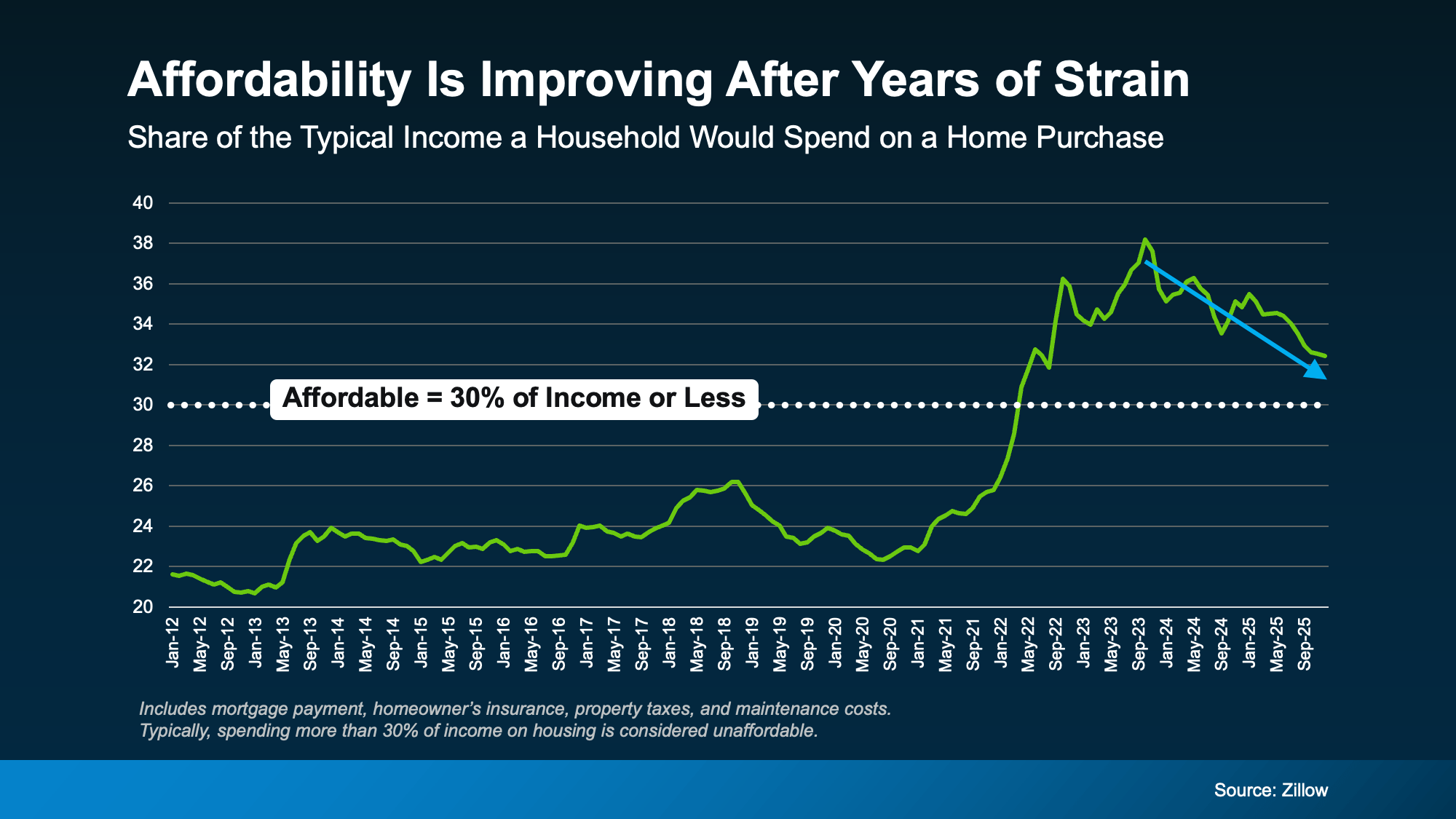
We're not quite back to Zillow's guideline of spending 30% or less of your income, so affordability remains tight, but things are moving in the right direction.
Why Affordability Is Improving
So what’s driving the change? A lot of attention has been on mortgage rates and how much they’ve fallen over the past year. But that’s not the only thing helping buyers right now. Here are three trends that are working in buyers’ favor:
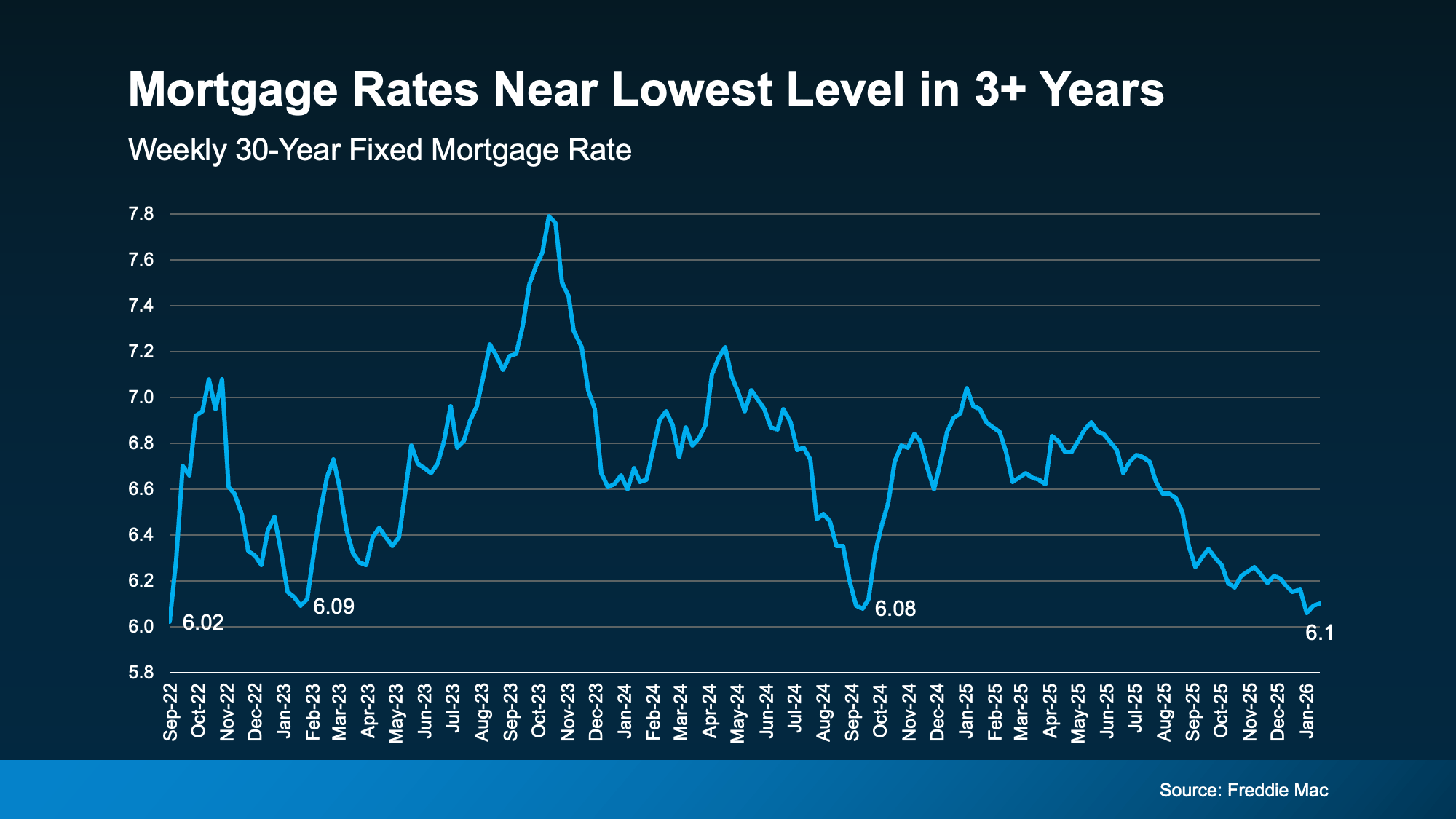
1. Mortgage rates have eased. Rates are now close to their lowest level in more than three years, which is helping bring monthly payments down and making homes a little more affordable for buyers.
2. Home price growth has slowed down. While prices aren’t dropping nationwide, they’re rising much more slowly than a few years ago. That means buyers aren’t dealing with sudden spikes in purchase prices, which helps keep monthly payments more manageable and makes buying a home a bit more predictable.
3. Wages are rising faster than home prices. This one’s especially important, as Mark Fleming, Chief Economist at First American, explains:
““When income growth exceeds house price growth, house-buying power improves—even if mortgage rates don’t decline meaningfully.”
”
None of this makes buying cheap, but it helps explain why the numbers are starting to work a little better for buyers than they did just a year ago. In short, the factors that pushed affordability down over the past few years are finally easing. Fleming explains it well:
““Affordability remains challenging, but for the first time in several years, the underlying forces are finally aligned toward gradual improvement. Mortgage rates may drift down only slowly, but income growth exceeding house price appreciation will provide a boost to house-buying power — even in a higher-rate world. Affordability won’t snap back overnight, but like a ship finally catching a steady tailwind, it’s now sailing in the right direction.”
”
These three factors are why economists expect affordability to keep improving in 2026.
Where Homes Are Becoming Affordable First
But how much will affordability actually improve? In some areas, quite a bit. Zillow says several markets are expected to drop back below the 30%-of-income affordability threshold by the end of the year.
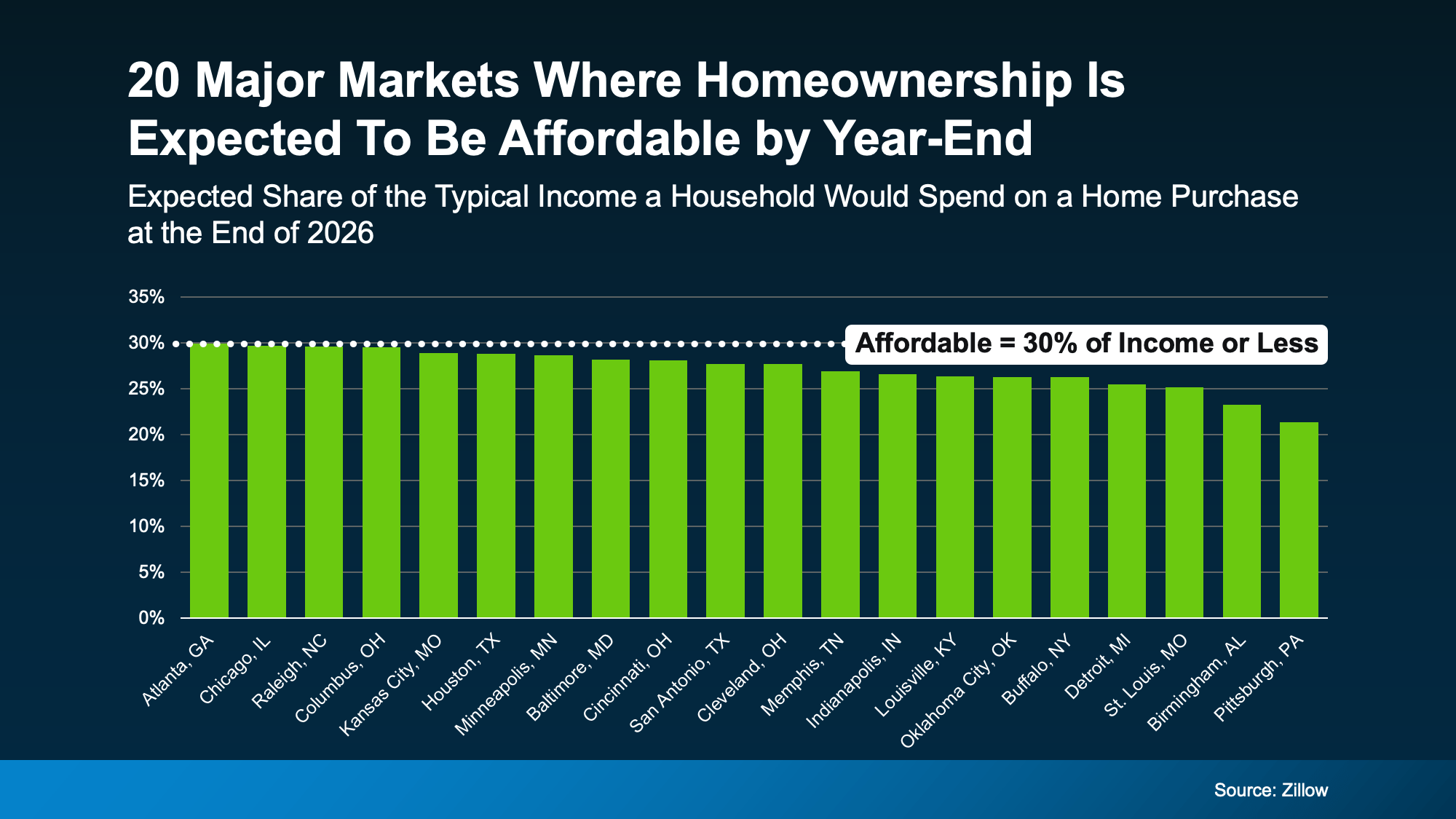
That doesn’t mean you have to be in those markets or wait until the end of the year to buy. Many areas are already seeing large gains in affordability. Talk with a local agent about what’s happening where you live. You might find you can buy sooner than you thought.
Bottom Line
For the first time in a long while, homes are becoming more affordable, and that’s a big change.
Because these improvements aren’t happening uniformly, what matters most is understanding how things are changing in your neighborhood. If you want to see how these trends are playing out here, let’s talk.