You’ve probably heard that homeowners today have built up a lot of equity. But what does that actually mean for you? Let’s break it down in a simple way.
Your equity isn’t just a number, it’s a powerful asset that can help you take your next big step in life.
How Much Equity Does the Typical Homeowner Have?
As you pay down your loan and home values increase over time, the portion of your home you own outright grows. That’s your equity.
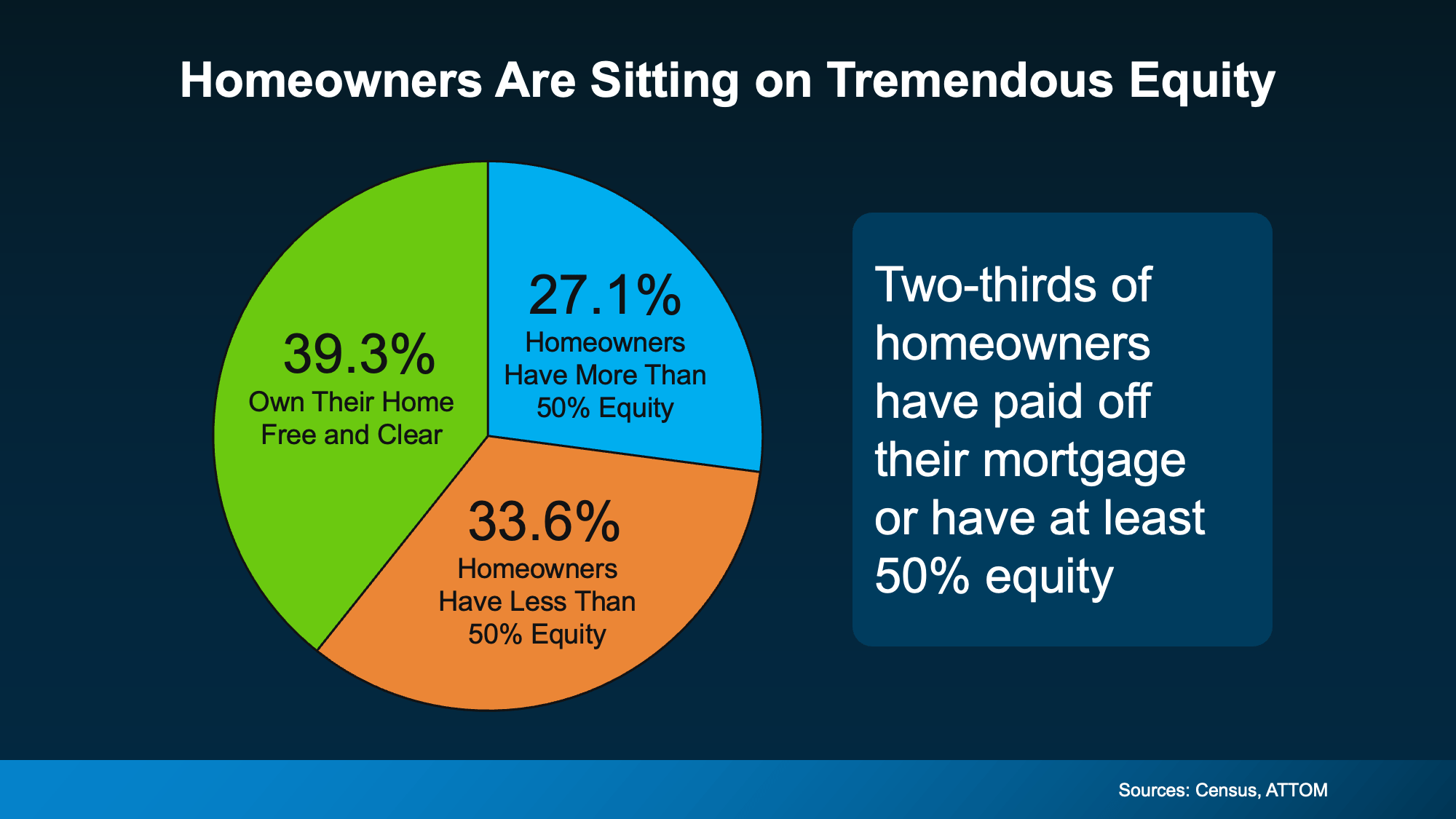
According to Census and ATTOM data, two-thirds of homeowners now have a substantial amount of it.
Thirty-nine percent own their homes outright with no mortgage, and another 27% have at least half their home's equity (see chart below).
That’s huge. To put it in dollar terms, Cotality reports the typical homeowner now has nearly $300,000 in equity, that’s well into six figures.
Whether you have that amount, more, or a little less, here are some examples of ways you can use it.
Ways You Could Use Your Home Equity
1. Move Into a Home That Better Fits Your Life
Your needs change over time. Maybe your home feels too small, or perhaps you have more room than you need now that your adult children have moved out. Either way, you can use your equity as a down payment on a home that better fits your current and future needs. You might even have enough equity to buy your next house with cash.
2. Upgrade Your Current Home
If you’re not ready to move, you can reinvest the money in your current home. Updating the kitchen or bathrooms can increase your home’s value when you decide to sell. Check with a real estate agent first so you can focus on the updates that will give the biggest return.
3. Fund a Major Life Goal
Equity can also help you reach life goals — like starting a business, saving for retirement, paying for education, or supporting a loved one. Some homeowners even use it to help family members cover a down payment on a home.
4. Avoid Foreclosure in Tough Times
If you’re having trouble making payments, your home equity can be a lifeline. Many homeowners facing financial hardship can sell their homes and come away with money instead of going through foreclosure. If that’s on your mind, speak with a real estate expert to learn your options and how your equity can help.
Your Next Steps
If you’re thinking about using your equity for one of these reasons, here’s a simple way to get started:
Step 1: Reach out to a local agent and ask for a personalized equity estimate on your home so you know what you’re working with.
Step 2: Talk with a financial advisor to figure out the smartest way to put that equity to use.
Because when you tap into this resource, keep in mind a few things, such as maintaining a healthy loan-to-value ratio even if you use some of your equity.
That means, as a general rule, you should keep at least 20% equity in your home as a financial cushion, something many homeowners didn't realize during the 2008 crash.
The good news is that, according to the Intercontinental Exchange, most of today’s stocks meet that guideline.
““As of Q4, mortgage holders have $17.3T in home equity, including $11.2T in tappable equity ‒ accessible via cash-out refinances or home equity lines while maintaining 20% equity in the property . . . ”
”
Bottom Line
Your home equity is likely one of the biggest financial assets you have. Whether you’re thinking about moving, making upgrades, or going after a big goal, it’s worth taking a closer look at what it can do for you. Connecting with a financial advisor is a great place to start and can help you understand your options.
What’s one goal you’d pursue right now if money weren’t an issue?