You’ve probably heard that the Federal Reserve, or Fed, is raising rates again. If you’re thinking about buying or selling a home, you may be wondering what that could mean for you.
With all the headlines, it’s easy to assume the Fed directly sets mortgage rates. That’s actually a common misconception. The Fed doesn’t set them, but its decisions can still influence where mortgage rates go.
So, what does this mean for you? The next few months may feel a little uncertain, but the Fed is focused on the bigger picture. With the right plan, you can still make a move that makes sense for you. Let’s break it down.
Why the Fed Is Raising Rates
It all comes back to inflation. When prices rise quickly, everyday expenses go up, which can leave buyers with less spending power and make it more expensive to build homes.
So, the Fed raises its key short term rate, known as the Federal Funds Rate, to help slow inflation. And this is where things can get a little confusing.
MYTH: The Fed controls mortgage rates.
REALITY: The Fed can influence mortgage rates, but it’s only one factor that affects them.
““The Federal Reserve influences mortgage rates, but doesn’t set them. . . Mortgage rates are influenced by many elements, including the inflation rate, the pace of job creation, and whether the economy is growing or shrinking. The Federal Reserve’s monetary policy is a factor, too . . .”
”
Here’s the easiest way to understand how it all works. Mortgage rates tend to follow the 10 year Treasury yield, which is the return investors get for lending money to the government for 10 years. That yield can move up or down based on what investors expect from inflation and the economy.
Right now, the conflict in Iran is one of the factors influencing that yield. Higher oil prices can raise concerns about inflation, which can also affect mortgage rates. That’s why news about the conflict may cause rates to move. If the situation improves, it could ease some inflation pressure and potentially help mortgage rates. But the timing is difficult to predict.
What the Fed does can influence that yield, too. When the Fed raises the Federal Funds Rate to fight inflation, investors take notice. That can push the 10 year Treasury yield higher, and mortgage rates often follow. Once inflation starts to cool, the yield can come back down, and mortgage rates may follow. That can give buyers some of their purchasing power back (see graphic below).
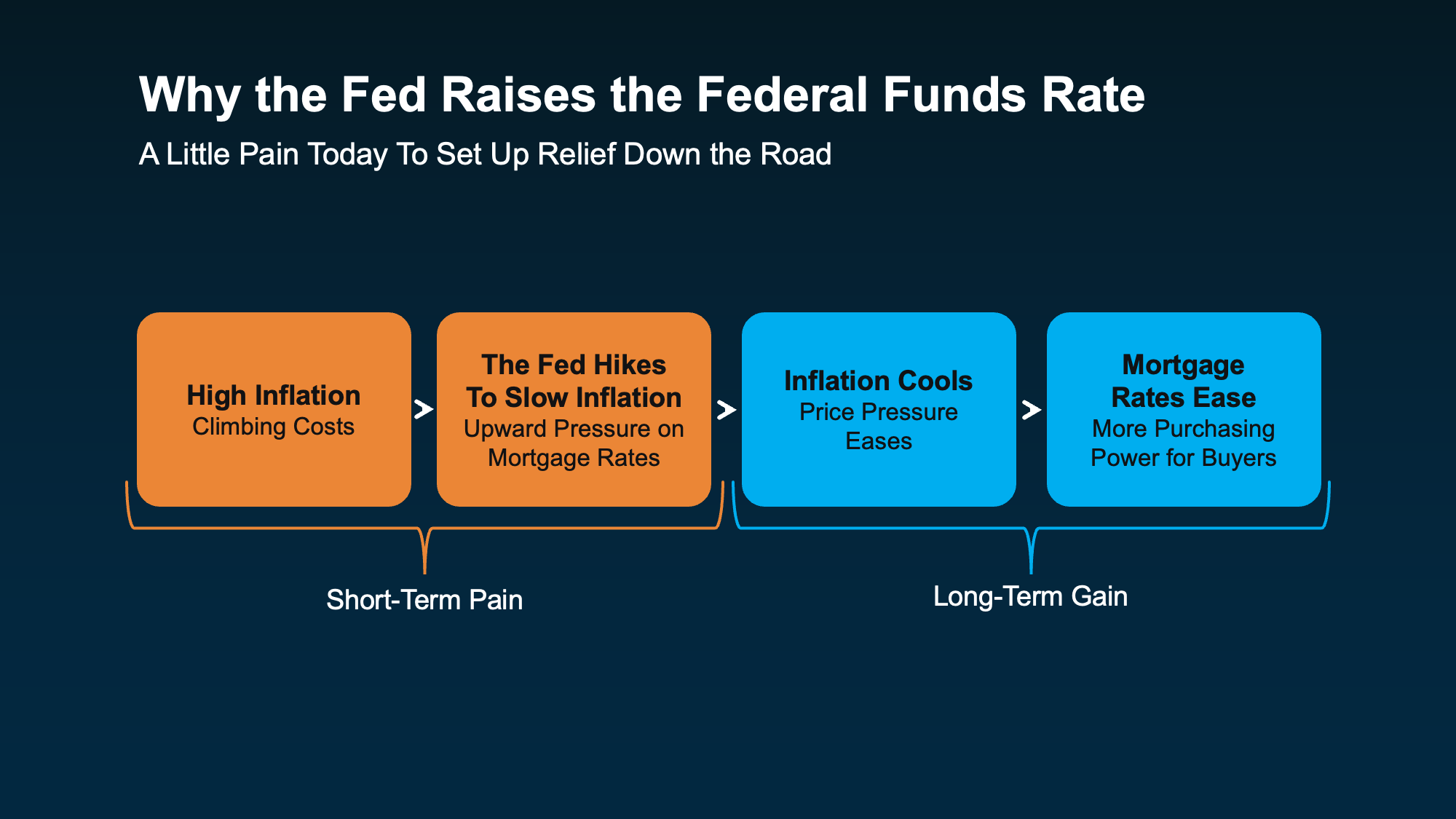
Think of it as a little pressure today that could lead to some relief down the road. But how long will that short term pressure last? A lot will depend on what the Fed does next.
There’s a Strong Possibility the Fed Will Hike Again This Year
According to CME FedWatch, there’s more than an 80% chance the Fed will raise the Federal Funds Rate at least one more time before the end of 2026 (see graph below).
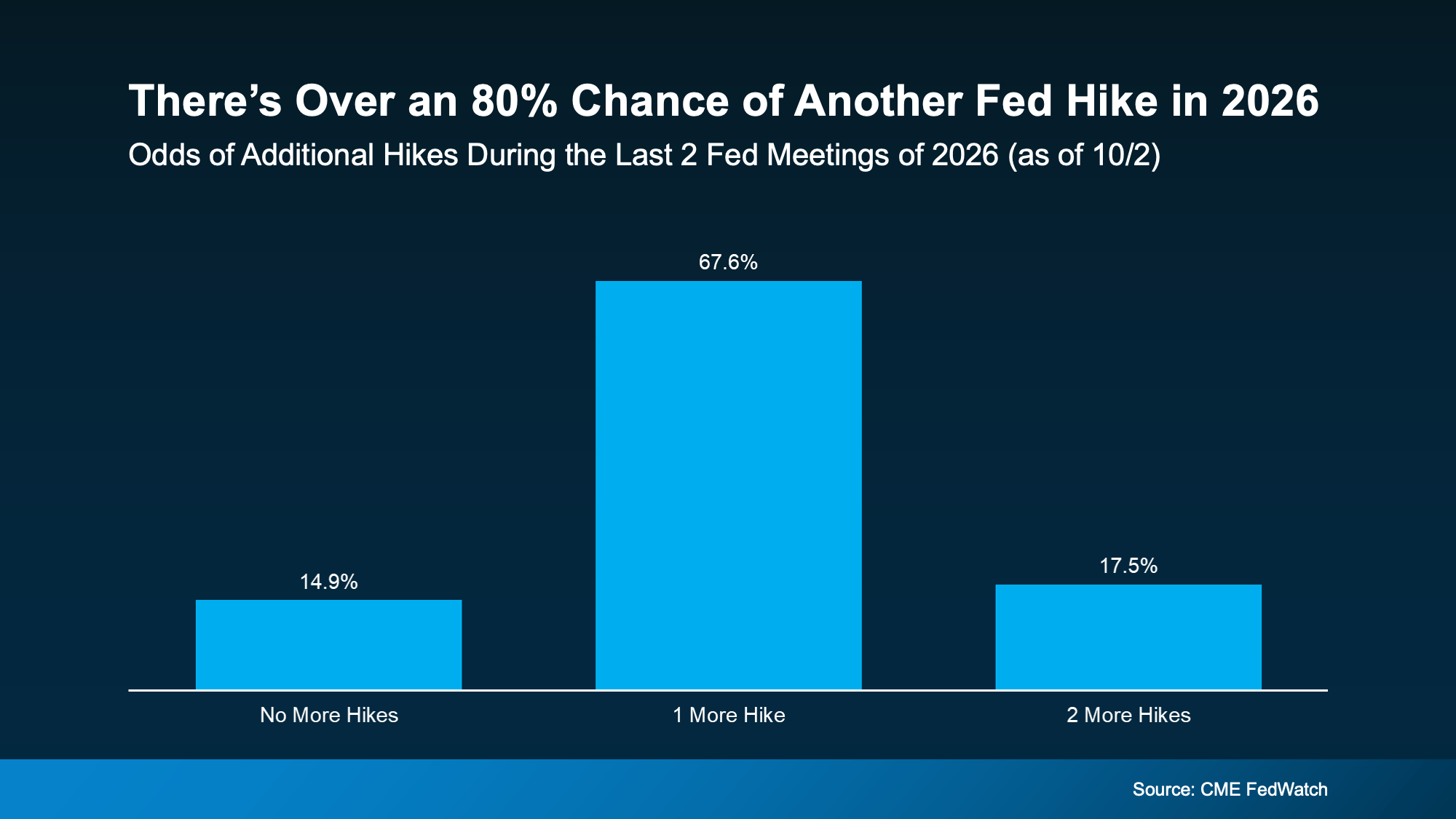
Remember, the Fed doesn’t directly set mortgage rates. But another rate hike could keep some upward pressure on mortgage rates in the short term. So, is it better to wait? Sam Williamson, Senior Economist at First American, puts it this way:
““Over time, firmer Fed action could help steady the bond market and open the door to lower mortgage rates, but only if investors become more confident that inflation is coming under control.”
”
There are also some early signs that inflation may be starting to cool. In August, inflation came in lower than experts expected:
PCE inflation dropped to 3.4%, down from 3.7% in July.
Core PCE, the Fed’s preferred measure that excludes food and energy prices, fell to 3%, down from 3.3%.
That’s a positive sign, and it’s one reason the chances of a rate hike at the Fed’s October meeting have dropped recently. But inflation is still above the Fed’s 2% target and has been for about five years. That means lower rates could still be a while away. For now, the best approach is to have a plan that works with today’s rates.
How To Make Your Move Work Right Now
While another rate hike isn’t the news you want to hear, it doesn’t mean you have to put your plans on hold. There are still ways to make a move in today’s market.
If you’re buying: Get pre approved so you know your actual budget. Talk with your lender about ways to get the best rate possible. Once you’re under contract, consider locking your rate so a last minute increase doesn’t affect your payment.
If you’re selling: Decide what matters most to you, whether that’s selling quickly or getting the highest price. Your strategy may look different depending on your goal. Price your home for today’s buyers, who may have less purchasing power with higher rates. You can also consider offering a rate buydown or another concession, which may help a buyer’s budget more than a price reduction.
Bottom Line
The Fed doesn’t directly set mortgage rates, but its rate hikes can keep them elevated for a while. The goal is to bring inflation down and eventually create room for rates to come down, too. With more hikes possible this year, waiting may not work in your favor. Let’s put together a plan that works with today’s rates.