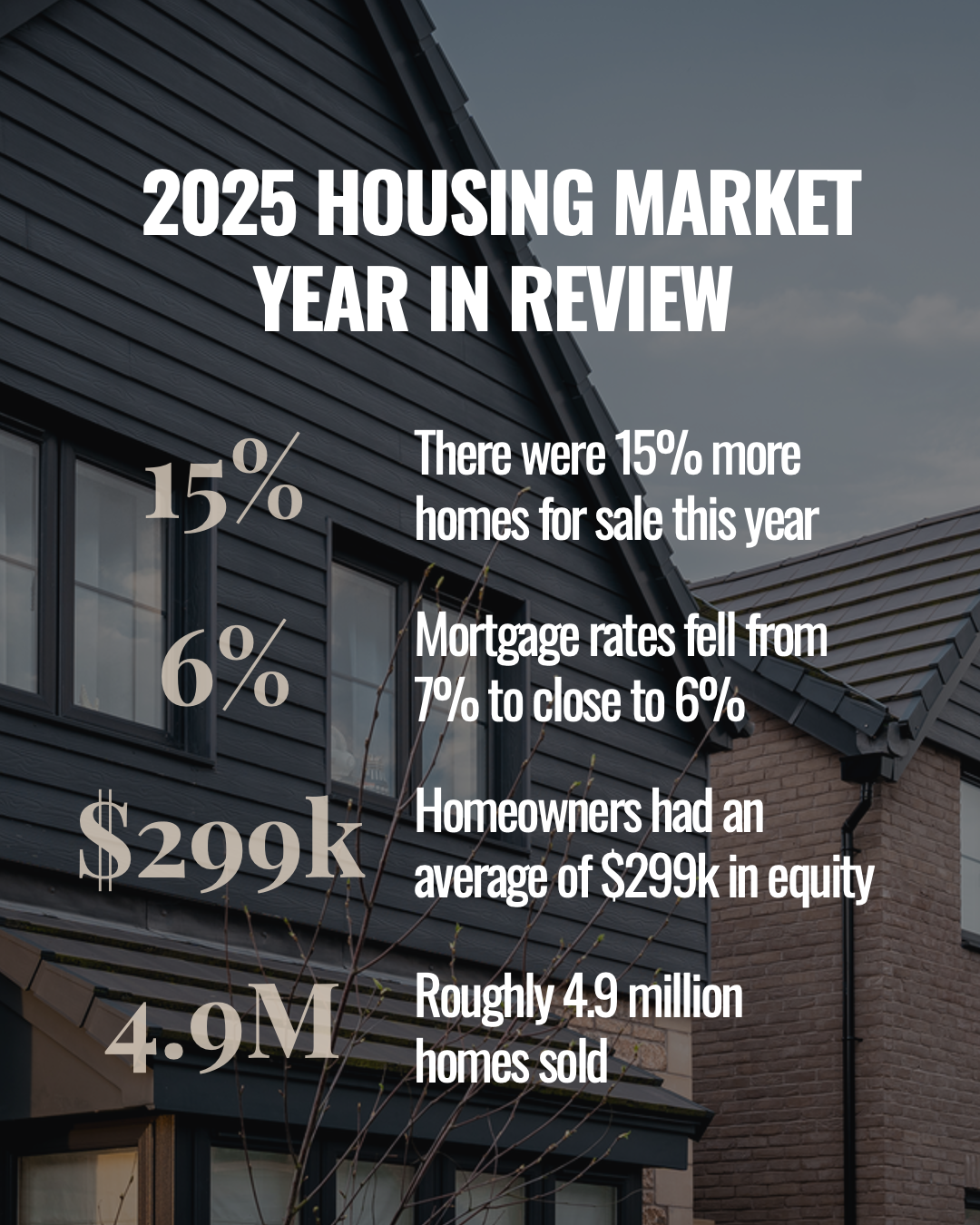
As we close out 2025, the U.S. housing market has continued to evolve in ways that reflect both persistent challenges and surprising resilience. After years of high borrowing costs, low inventory, and shifting buyer behavior, this year was defined by moderation, regional differences, and changing buyer dynamics.
1. A Year of Slower Growth—but Not Collapse
After the rapid price gains of the past decade, home price growth in 2025 was more subdued. Many markets saw prices continue to rise, but at much slower rates than the prior boom years:
National median prices rose modestly year-over-year — Redfin put the median sale price around $433,275 with around a 0.7% increase compared to the previous year. Redfin
Zillow’s national value index showed only slight upward movement, indicating a stabilized rather than overheated market. Zillow
This suggests a market transitioning out of imbalance, rather than crashing — good news for long-term stability.
2. Sales Activity: A Slow but Real Rebound
Sales volumes were among the most watched indicators of 2025:
The National Association of Realtors reported a small increase in existing-home sales, rising for multiple consecutive months, though still modest compared with historical averages. The Wall Street Journal
Inventory remained tight overall, but some reports noted increases in listings compared to the prior year. PR Newswire
What this tells us: buyers are gradually returning to the market, especially where mortgage rates have eased slightly.
3. Mortgage Rates Moderated, But Remained Elevated
One of the biggest drivers of housing demand in 2025 was financing costs. After peaking in prior years, mortgage rates trended downward, bringing slight relief:
Rates were notably lower than the highs of earlier years, contributing to an uptick in refinance activity and modest growth in purchase applications. The Mortgage Reports
While they didn’t return to the pandemic-era lows, even modest declines helped unlock some buyer demand.
4. Shifting Buyer Dynamics
The mix of people participating in housing changed meaningfully:
First-time buyer participation hit multidecade lows, with fewer young people entering the market due to affordability challenges. National Association of REALTORS®
At the same time, cash offers and higher down payments surged, giving more financially seasoned buyers a competitive edge. National Association of REALTORS®
This trend signals a widening gap between sellers with built-up equity and aspiring homeowners still priced out of entry-level homes.
5. Regional Differences Were Sharp
Not all markets moved in the same direction:
The Midwest and Northeast saw brisk sales and strong interest in affordable midsize cities, reflecting a shift away from historically expensive coastal areas. Business Insider
Some Sun Belt regions experienced slower selling speeds and price declines, revealing how local demand can vary widely. Axios
These regional divides underscore that national headlines only tell part of the story — where you live still matters.
6. Market Stress Indicators
While the broad market wasn’t collapsing, there were signs of strain:
In some cities like Austin, TX, home values recorded significant month-to-month drops. MySA
Realtor.com reported a sharp increase in homes being delisted as sellers chose to pull rather than price competitively. Investopedia
There’s also evidence that a notable number of recent buyers are underwater on their mortgages, a sign of localized downward pressure. MarketWatch
These stress indicators don’t point to a nationwide crisis — but they do highlight uneven performance across the U.S.
What 2025 Means Going Into 2026
As we look ahead, experts see reason for cautious optimism:
Forecasts suggest that home sales and prices could gain momentum in 2026 if mortgage rates come down further and inventory expands. Business Insider
At the same time, ongoing affordability issues mean that policymakers, builders, and lenders will need to address supply and cost barriers if broader homeownership participation is to improve.
Key Takeaways for Buyers & Sellers
Prices stabilized, not plummeted
Sales ticked up amid slightly lower rates
First-time buyers struggled, cash buyers dominated
Market performance varied dramatically by region
Whether you’re thinking about selling, buying, or simply watching the market, 2025 highlighted the importance of local conditions, interest rates, and long-term affordability trends.