You might not want to pause your homebuying plans this winter. Many people think spring is the best time to buy, but new data suggests January could be the smarter choice for buyers watching their budgets.
You might not expect it, but January is worth a second look — here’s why.
1. Prices Tend To Be Lower This Time of Year
LendingTree says January is the cheapest month to buy a home — and there's a reason. Historically, January often has one of the lowest price-per-square-foot points all year. By spring, demand picks up and prices usually rise. That’s not just a guess; it’s a consistent pattern backed by years of market data.
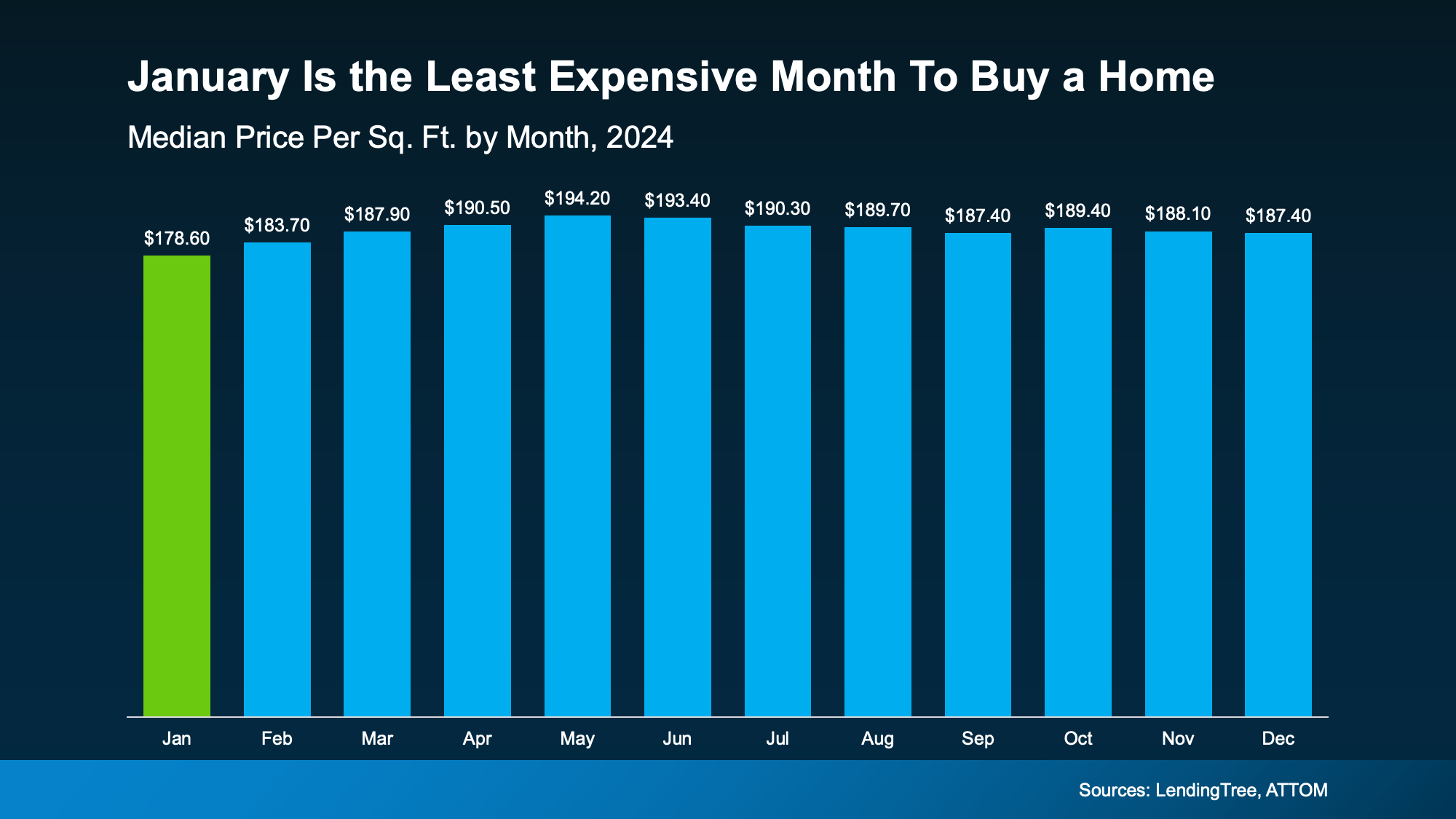
So, how much less does that really mean? Let’s break it down. Looking at the most recent full year of data, buyers who purchased a typical 1,500-square-foot home in January paid about $23,000 less than those who bought in May. And this kind of seasonal price difference tends to show up year after year (check out the chart below).
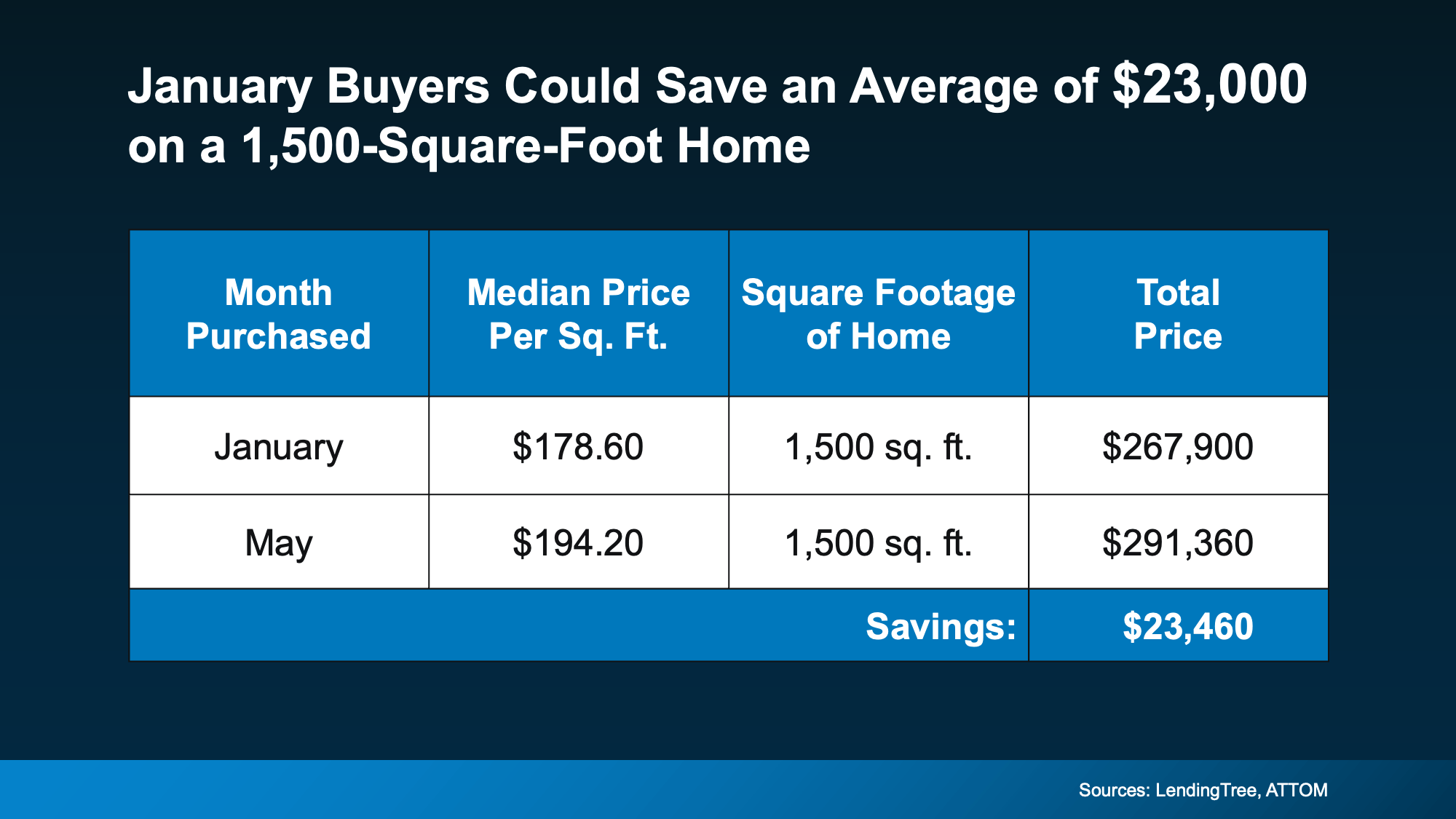
Your number will depend on the price, size, and type of home you’re buying. Still, the trend is clear: for today’s buyers, you’re seeing meaningful savings—especially when affordability is still tight for many households.
2. Fewer Buyers and More Motivated Sellers
And why do buyers usually get better deals in winter? It’s straightforward. Winter is one of the slowest times in the housing market. Many buyers and sellers hold off, thinking spring is the better time to act. That slowdown means:
You’re not competing with a ton of other buyers
You’re less likely to end up in a bidding war
Sellers are usually more open to negotiating since there aren’t as many buyers around
With fewer buyers active, you’ve got time to take a leisurely look around.
But winter doesn’t just thin the buyer pool — it also shows which sellers really need to move. With fewer people looking for homes in the colder months, sellers who are serious about selling are often more willing to negotiate. As Realtor.com explains:
““Less competition means fewer bidding wars and more power to negotiate the extras that add up: closing cost credits, home warranties, even repair concessions. . . these concessions can end up knocking thousands of dollars off the price of a home.”
”
This can mean anything from price reductions and help with closing costs to flexible timelines and other concessions. It doesn’t guarantee you’ll score discounts on every house, but it does make sellers more likely to take you seriously and give you space to negotiate.
Should You Wait for Spring?
Here’s the real takeaway: when you take the pressure and frenzy out of the busy spring market, it’s easier to find the home you want at a price that fits your budget.
If you wait until spring, more buyers will be shopping — which could drive up what you pay and add extra stress.
Only you can decide the right timing for your life — don’t feel like you have to wait for warmer weather to make your move.
Buying in January gets you less competition, potentially lower prices, and more motivated sellers — three advantages you won’t find if you wait until spring.
Bottom Line
If you’ve been considering the next step, this season could offer more opportunities than you expect.
Curious what buying in January might look like for you? Let’s break down your numbers and check out the homes available in our area.